


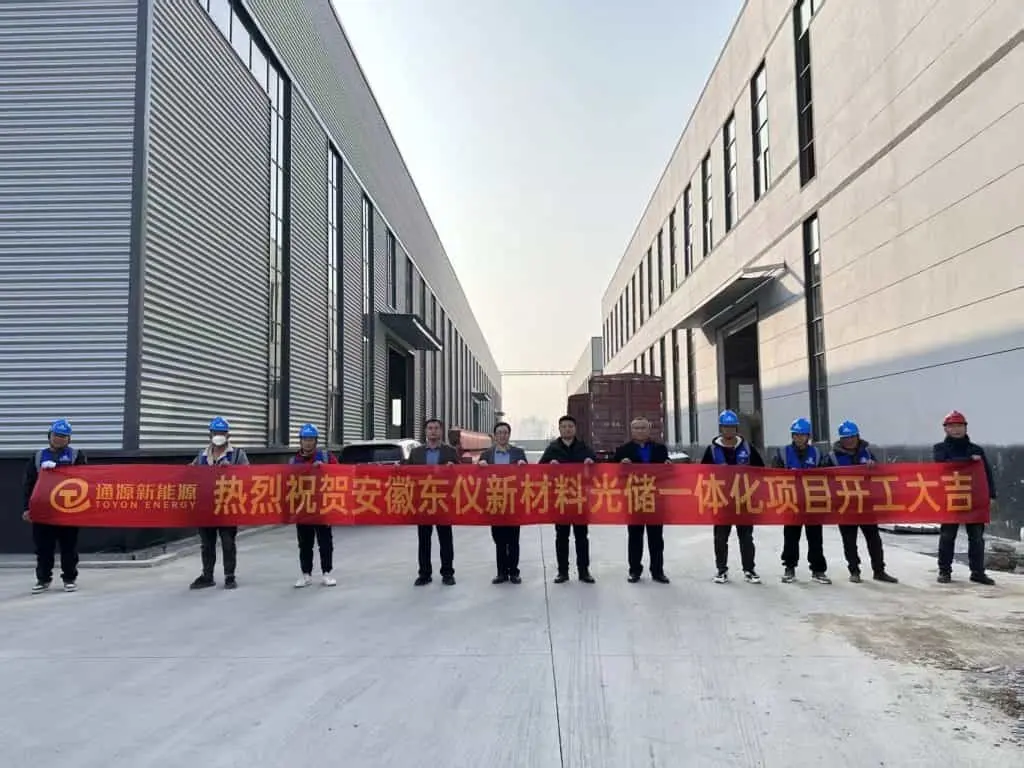
The solar-storage project for Anhui Dongyi New Material Technology commenced on December 19, 2025. The reported design is 2.08MWp DC and 1,710kW AC, using solar-ready and color-steel roofing areas. This update concerns construction commencement and the intended integration approach; later completion and operating results require their own project records.
Table des matières
Solar-Storage Project Construction Begins
Le 19 décembre 2025, le projet intégré de toiture solaire-stockage d'Anhui Dongyi New Material Technology, construit par Anhui Toyon Energy, a officiellement débuté. Centré sur un modèle innovant " solaire + stockage ", ce projet marque une avancée significative pour Anhui Toyon Energy dans le développement de solutions énergétiques intégrées diversifiées et multi-scénarios, promettant de fournir une énergie verte plus efficace et stable au client.
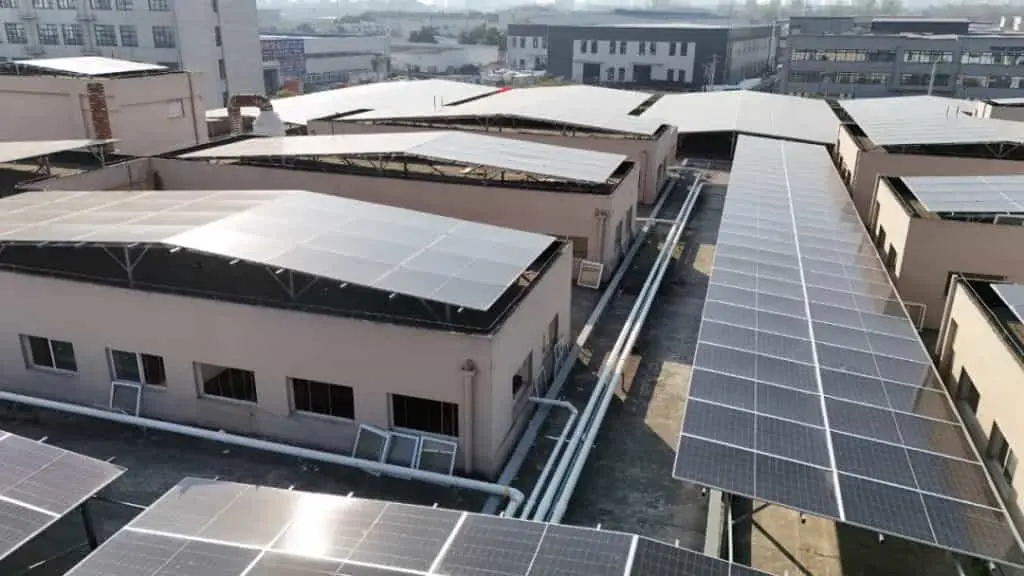
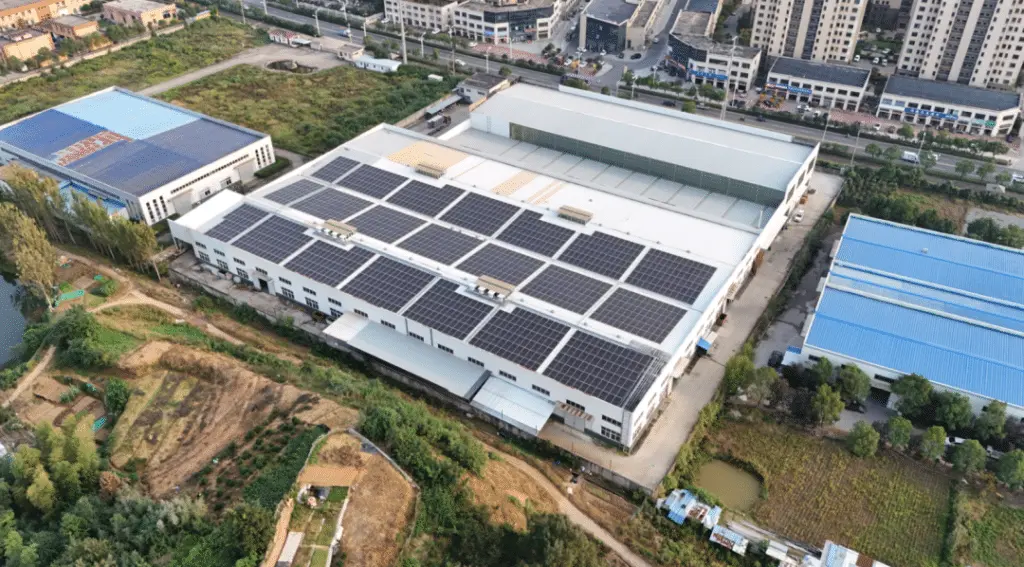
The solar-storage project features a designed installed capacity of 2.08 MWp on the DC side and 1,710 kW on the AC side. By fully utilizing the facility's extensive rooftop space, the project demonstrates exceptional adaptability through the innovative integration of two installation types: solar-ready roofing and color-steel tile roofing.
The solar-storage project's standout feature is its integrated solar-storage system design. Electricity generated by the PV modules passes through string inverters and a grid-connection cabinet; it is then used directly for on-site production ("self-generation and self-consumption") while operating in deep synergy with the accompanying energy storage system. The storage unit effectively smooths out generation fluctuations and enables load shifting between peak and off-peak periods—discharging power during peak tariff times with the aim of using the applicable tariff differences. Actual value depends on the load, prices and operating strategy. Additionally, it serves as an emergency backup power source during extreme conditions, significantly enhancing the facility's power supply reliability and energy autonomy.
Forte de son expertise technique et de sa vaste expérience en ingénierie dans les secteurs du solaire et du stockage, Anhui Toyon Energy s'engage pleinement à garantir l'achèvement sûr, de haute qualité et efficace du projet. Au-delà de la réduction directe des coûts d'électricité, le projet stimule la transition verte des opérations de fabrication en optimisant la structure énergétique, représentant une démarche stratégique vers des opérations à faible émission de carbone et à haute efficacité.
À propos d'Anhui Toyon Energy :
En tant que principal fournisseur de services d'énergie verte intégrée, Anhui Toyon Energy se consacre à propulser la transformation énergétique grâce à l'innovation technologique. L'entreprise opère en tant que fournisseur global de services dans le domaine des nouvelles énergies, intégrant l'investissement, le développement, la construction et l'exploitation. Avec pour mission de " stimuler la révolution énergétique et de préserver notre environnement naturel ", nous nous spécialisons dans la conception de solutions énergétiques sur mesure pour les entreprises industrielles et commerciales, aidant nos clients à atteindre le double objectif de réduction des coûts, d'amélioration de l'efficacité et de développement durable.
Tournée vers l'avenir, Anhui Toyon Energy reste engagée envers le professionnalisme et l'artisanat. Nous unirons nos forces à celles d'un plus grand nombre de partenaires pour impulser un avenir zéro carbone et insuffler un flux continu d'énergie verte dans la fabrication chinoise.
Solar-Storage Project: Questions to Resolve During Construction
The notes below provide general project context for readers. They do not add unreported milestones, performance results or commitments to the news above.
Coordinate the roof areas with the work plan
For the solar-storage project, two roofing types form part of the reported installation approach. The construction team needs to understand each area’s condition, access and approved mounting arrangement. Coordinate material movement and work boundaries with the factory’s operations. Using an available roof well means accommodating its structural and maintenance requirements as well as the proposed electrical layout.
Keep DC and AC capacities distinct
The solar-storage project report provides 2.08MWp on the DC side and 1,710kW on the AC side. Those figures describe different points in the generation system. They should not be added together or interpreted as an energy yield. A generation estimate needs site conditions and design assumptions; actual production must be assessed through operating records after the installation is commissioned.
Define the storage role before discussing dispatch
The solar-storage project is intended to coordinate PV with stored energy, including load shifting. The report does not publish the complete battery energy and power configuration. It therefore cannot establish a particular discharge duration. Define the intended service and the relevant operating priorities, then review the exact equipment and control arrangement against the facility’s load.
Review backup as a complete system function
For this solar-storage project, backup is described as an intended role. A backup assessment needs the selected loads, power conversion, switching, protection and controls to be considered together. The presence of storage does not automatically demonstrate uninterrupted production or the same behavior at another factory. Confirm the actual approved operating mode and the records needed to test it.
Plan the transition into operation
As the solar-storage project moves toward completion, the facility needs to know who will monitor performance, retain the equipment documents and respond to service questions. The handover should connect the installed configuration with the approved drawings and test records. A construction milestone is useful news, while commissioning and routine operation remain distinct tasks with their own evidence.
Illustrative operating review: changing factory shifts
Consider a factory that plans to add an evening shift after its PV installation is completed. The daily electricity total may rise while the timing of consumption also changes. A solar-storage project evaluation should review both effects. This is an illustrative planning question, not an additional operating fact about Anhui Dongyi. A useful review would compare the revised load profile with generation and the intended battery dispatch, then identify what the existing design can support and what would require a change.
Keep design changes connected to the records
If the factory changes the equipment scope or operating objective during construction, record the change and obtain the relevant review before it is implemented. Keep the drawing revision and the agreed responsibilities consistent across the design, construction and operating teams. That gives the facility an understandable handover record and helps later service personnel distinguish the original arrangement from subsequent changes, without relying only on the capacity stated in an early news announcement.
Foire aux questions
Is the solar-storage project already commissioned?
The reported milestone is construction commencement on December 19, 2025. This update does not establish a later commissioning date or measured operating output.
Does 2.08MWp specify the battery capacity?
No. It is the reported DC PV capacity. Battery energy is a separate quantity and is not specified in this update. The published AC PV capacity is 1,710kW.
Can another factory copy the solar-storage project configuration?
Use the example to identify questions, rather than assume the same arrangement will fit. A new site needs its own load, roof, connection and operating assessment, including the role of storage and any backup requirement.