


Toyon Energy welcomed Kenyan customers for a company visit, factory tour and business discussion. The visit provided an opportunity to introduce our solar energy products, showcase our manufacturing capabilities, and explore potential cooperation in the growing renewable energy market.
Índice de contenidos
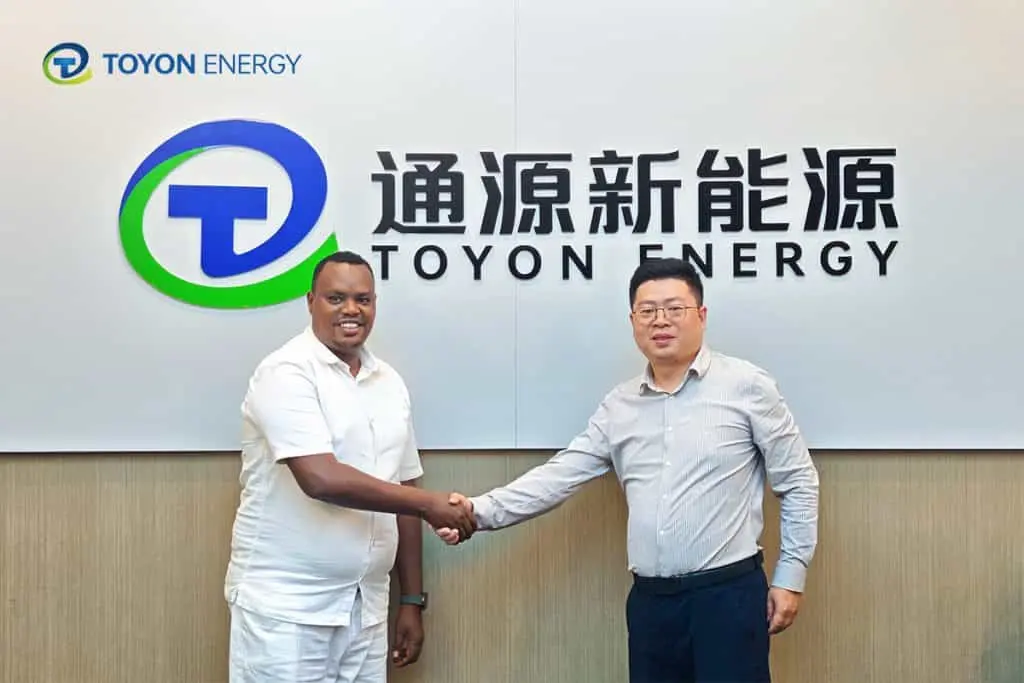
Kenyan Customers Tour the Factory and Product Range
During the visit, the Kenyan customers toured our factory and learned more about our production processes, product quality management, and inspection procedures. The tour offered a closer look at how we work to deliver reliable solar and energy storage products for different project requirements.
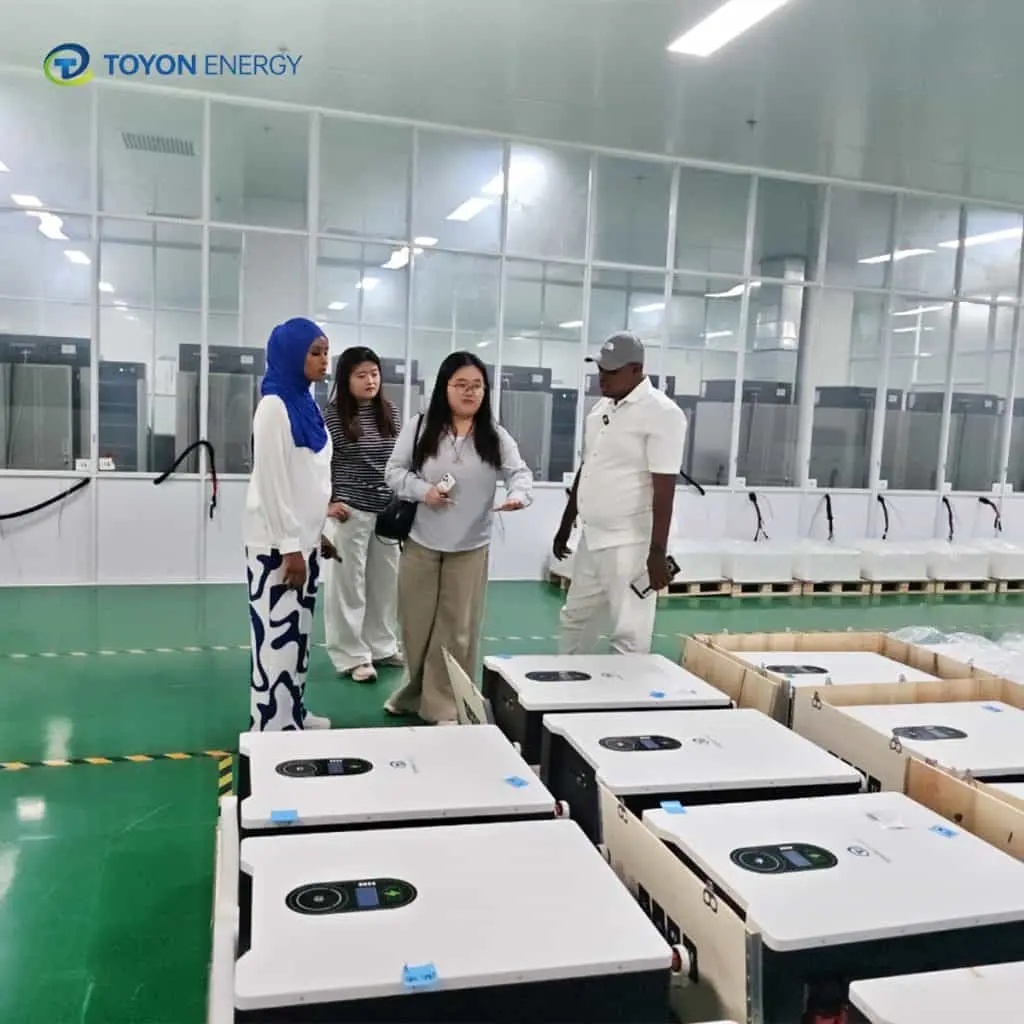
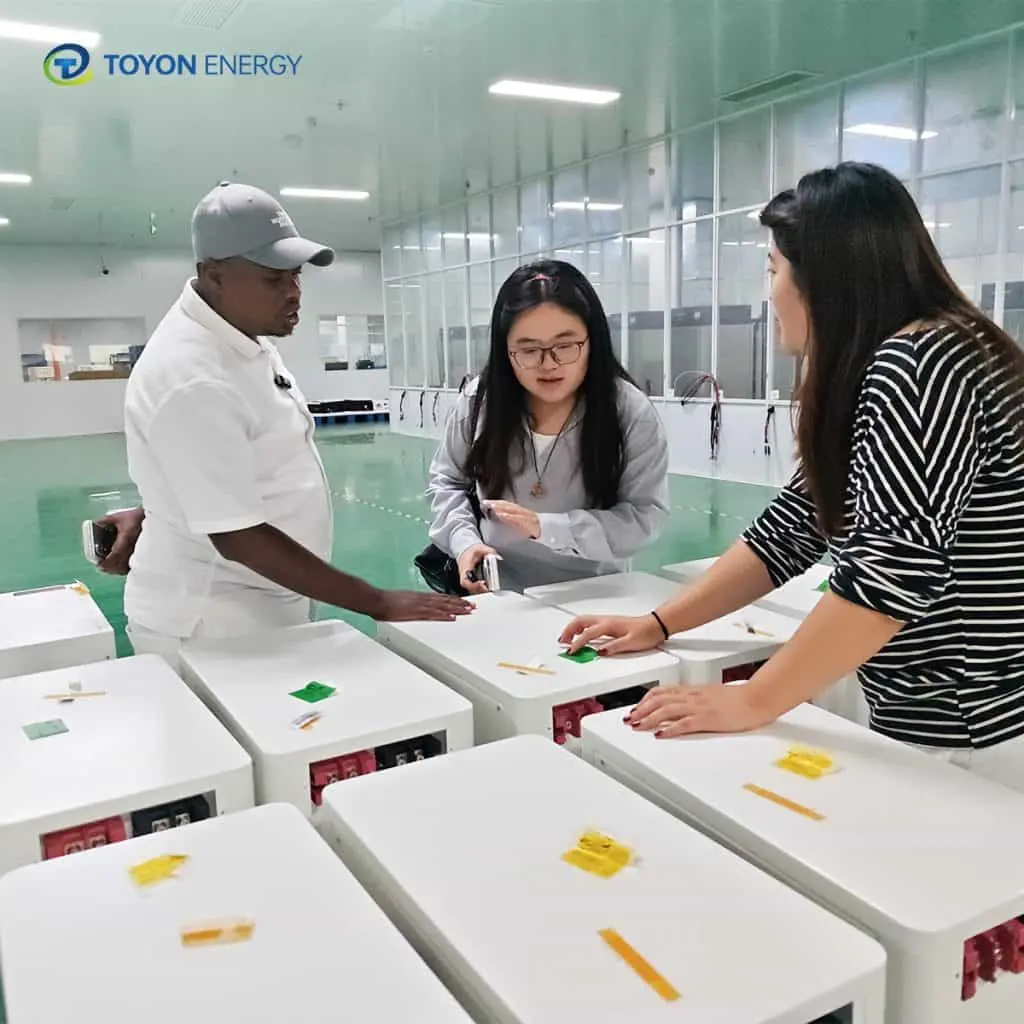
Our team also introduced Toyon Energy’s product portfolio, including paneles solares, inversores híbridos, lithium battery systems, and commercial and industrial (C&I) energy storage solutions. These products can support a range of applications, from residential and commercial solar installations to larger projects requiring integrated solar PV and battery energy storage systems.
Discussing Solar and Energy Storage Opportunities in Kenya
Kenya offers opportunities for solar energy development across commercial facilities, businesses, and other applications where reliable electricity and energy cost management are important considerations.
During the discussions, our team exchanged information with the customers about their market needs, product requirements, and potential project applications. We also discussed how suitable solar PV systems and battery energy storage solutions can be selected according to electricity consumption, installation conditions, and backup power requirements.
For commercial and industrial projects, combining solar PV with battery energy storage can help businesses make better use of solar generation, manage electricity demand, and improve power supply resilience, depending on the system design and local operating conditions.
Continuing the Discussion After the Factory Visit
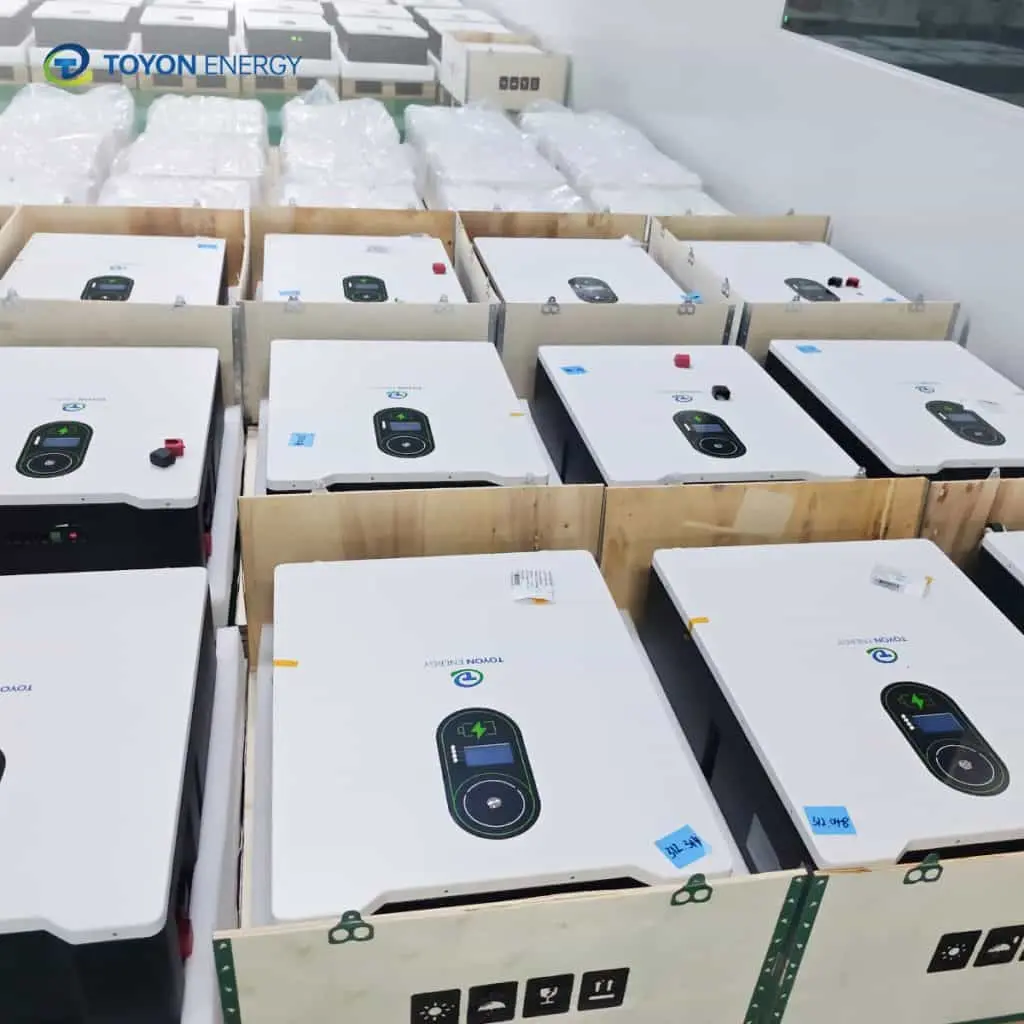
At Toyon Energy, we value direct communication with our customers. Factory visits allow partners to better understand our products, ask technical questions, and discuss their project needs with our team.
We believe that reliable products, clear communication, and responsive technical support are important foundations for long-term business relationships. We look forward to continuing discussions with our Kenyan customers and exploring opportunities to support solar and energy storage projects in Kenya and the wider African market.
Preparing for a Site-Specific Project Discussion
For Kenyan customers preparing a follow-up project discussion, a useful starting point is the facility's operating schedule, electricity consumption and available installation space. Existing equipment details and any available electrical drawings help the project team understand which parts of the system need to work together.
These inputs make a discussion more specific than a comparison of equipment capacities alone. A business seeking lower daytime grid purchases may have a different priority from a facility that needs selected loads to continue during an outage. Storage power, usable energy and the intended operating mode should therefore be considered separately before a configuration is proposed.
An in-person factory tour gives Kenyan customers a chance to connect product information with the equipment they can see and to ask questions directly. It remains one stage in project preparation: the eventual design still needs to reflect the installation site, the local grid connection and the customer's operating priorities. Continuing the exchange with a clear project brief helps both sides identify which documents and technical checks are needed next.
Kenyan Customers: Project Preparation After the Visit
Start with the operating priority
For Kenyan customers, the most useful follow-up question is what the facility needs electricity to do. A business with daytime consumption may first assess direct use of PV generation. A site concerned about outages needs to identify essential loads and the period they must operate. Those priorities can lead to different designs. State the problem clearly before comparing capacities, so the project team can request the information that will actually influence its recommendation.
Equipment Information for Kenyan Customers
A proposed addition needs to work with the equipment already at the site. Kenyan customers can prepare model details for installed PV, inverters, batteries and generators, alongside any available electrical drawings. The technical review then has a basis for assessing interfaces and operating modes. Similar product names or capacity labels do not establish compatibility. A clear equipment record also helps the purchasing contact and the installer discuss the same configuration rather than different assumptions.
Connect the product discussion with the installation area
The factory tour introduces equipment in one environment; the intended installation has its own conditions. Kenyan customers preparing a project brief can include the available space, access arrangements and relevant environmental information. Roof condition, equipment placement and the electrical connection need site-specific assessment. Photographs and dimensions can help the team identify open questions, while the responsible local professionals determine which checks and approvals are needed before the arrangement becomes an installation plan.
Agree on the next step and its owner
A useful follow-up from the visit identifies the next decision, the information still missing and the person providing it. Kenyan customers and the project team can distinguish a preliminary discussion from an approved design, equipment supply and eventual commissioning. Clarify who will install, test and support the system, and which documents accompany the handover. That keeps the exchange practical and gives both sides a clear way to continue the conversation after an informative factory visit.
Project Questions After a Factory Tour
What information helps Kenyan customers prepare for a technical project discussion?
Start with electricity bills, the operating schedule, a load profile where available, and the proposed installation area. If the facility already has solar, batteries or a generator, include the equipment model details. Explain the problem to be solved, such as daytime consumption, an evening energy requirement or backup for particular loads.
Does a factory visit replace site-specific system design?
No. A visit helps customers review the product range and discuss production and inspection procedures. Equipment selection still depends on the site's electrical conditions, installation environment and intended operating mode. The project team needs to confirm component compatibility and connection requirements before finalizing a system.
Does every commercial solar project need battery storage?
Not necessarily. A facility with consistent daytime consumption may first evaluate how much PV electricity it can use directly. Batteries are worth assessing when there is a defined role for stored energy, such as energy shifting, demand management or backup. Backup operation also requires suitable power conversion, protection and controls; the battery alone does not establish that capability.