


Índice de contenidos
Solar panels generate electricity when the sun is shining, but what happens when energy demand rises in the evening or the grid goes down? This is where a hybrid solar system becomes useful. By combining solar panels, a hybrid inverter, and battery storage, users can make better use of solar energy and, with the right configuration, keep essential equipment running during power interruptions.
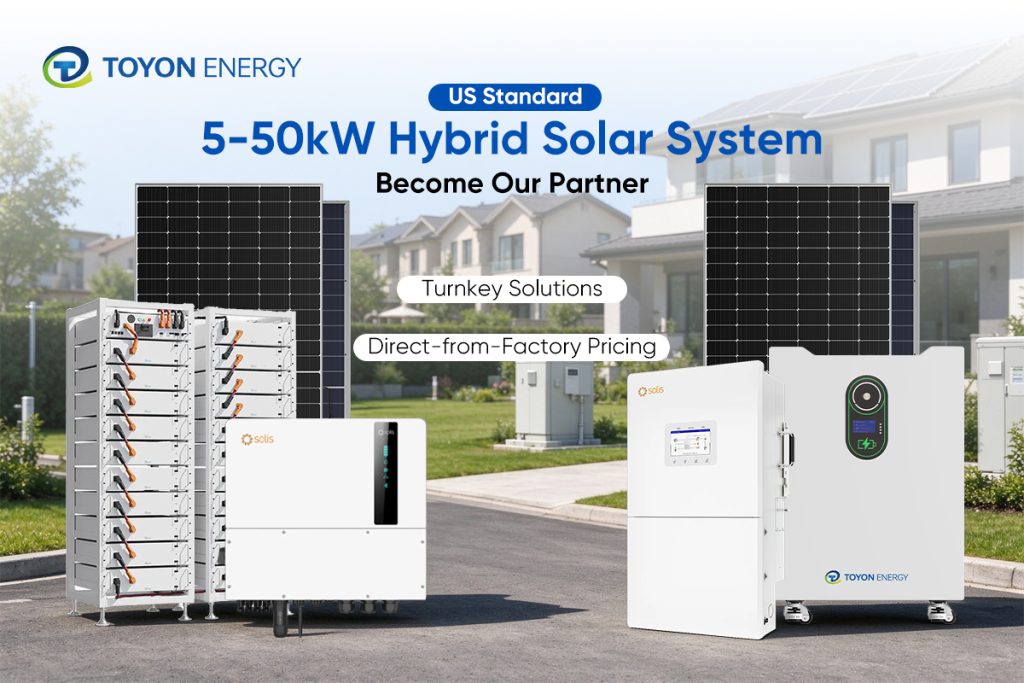
For homeowners, installers, and small commercial projects, choosing a 5–50kW hybrid solar system involves more than comparing inverter power ratings. Battery capacity, electrical compatibility, and actual energy consumption all matter.
1. Split-Phase or Three-Phase: Which Inverter Do You Need?
Not every building uses electricity in the same way. A residential property may require a 120V/240V split-phase supply, while a commercial facility may need a three-phase configuration.
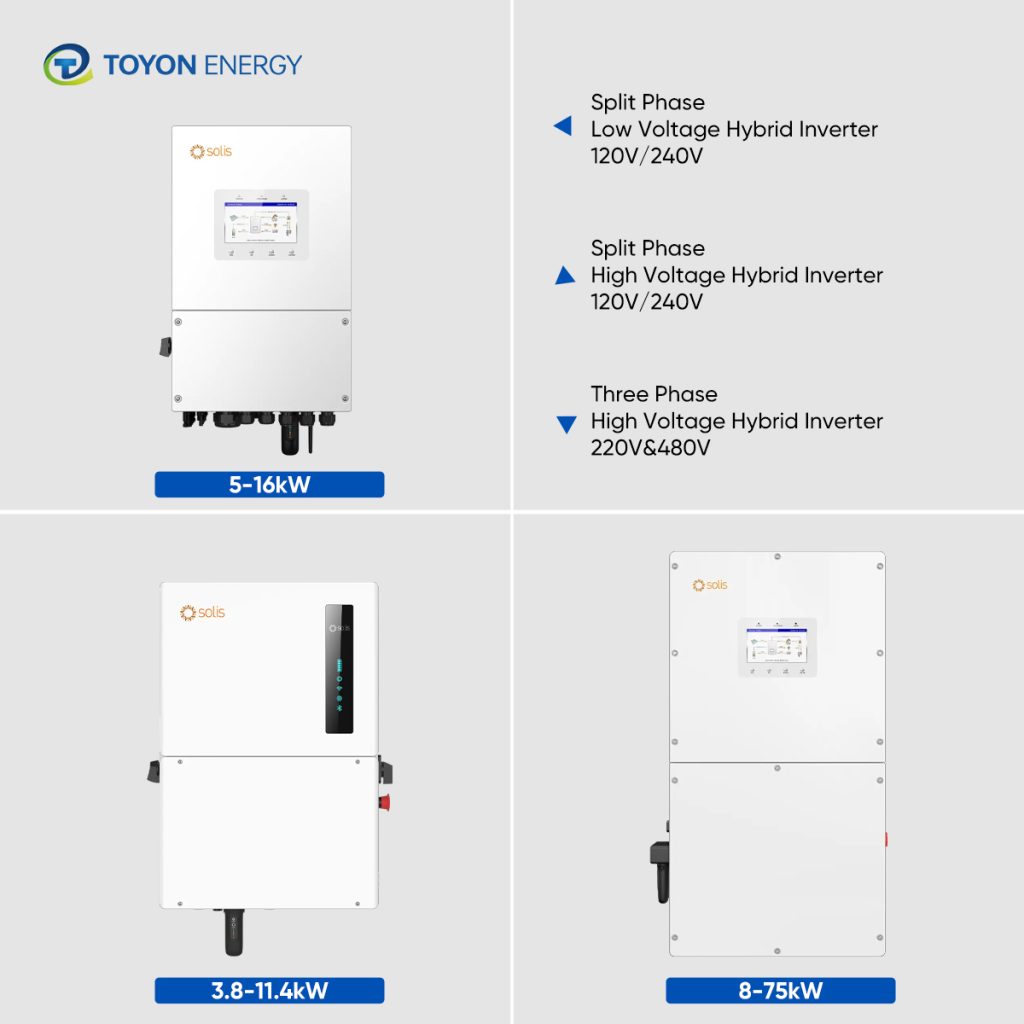
Hybrid inverters in Toyon Energy's product range include:
- 120V/240V split-phase low-voltage models
- 120V/240V split-phase high-voltage models
- 220V/480V three-phase high-voltage models
The right choice depends on the building's electrical system, connected equipment, and local grid requirements. Before selecting a 120V/240V split-phase hybrid inverter, check the exact model specifications rather than assuming that every inverter supports the same output.
2. How Much Battery Storage Is Enough?
A battery that looks large on paper may not provide as many hours of backup as expected. The answer depends on how much energy your equipment consumes and how much of the battery's capacity is usable.
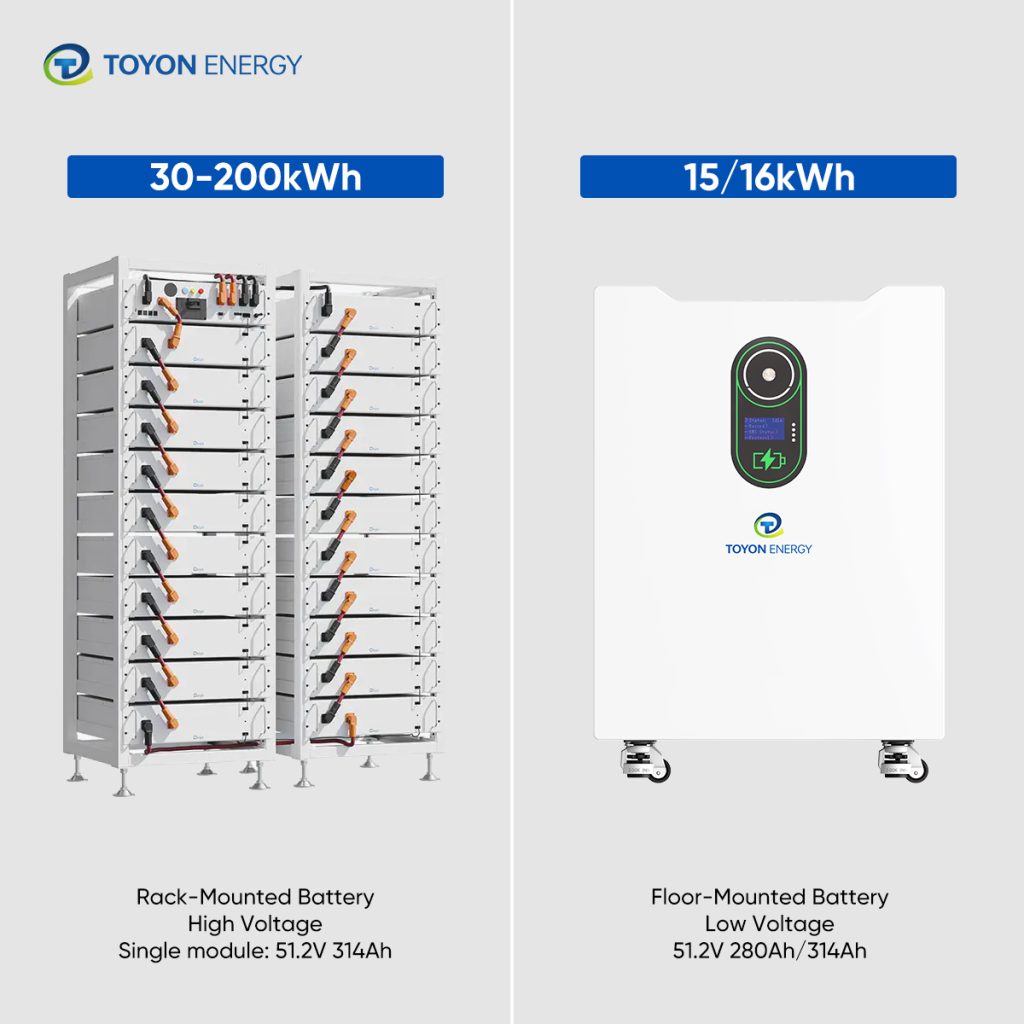
Two battery configurations shown in Toyon Energy's product materials illustrate the difference:
- 51.2V, 314Ah low voltage battery system: approximately 16.08kWh nominal energy.
- 51.2V, 280Ah low-voltage battery: approximately 14.34kWh nominal energy.
For example, a load consuming 2kW continuously would use 8kWh over four hours. Actual backup duration will also depend on usable battery capacity, conversion losses, inverter limits, and other connected loads.
When comparing a lithium battery storage system for solar power, look beyond the capacity figure. Battery compatibility, charge and discharge power, and the battery management system are equally important.
3. What Should You Check Before Buying?
Technical specifications and certification documents deserve careful attention, especially when equipment will be installed in another country.
The supplied product materials reference UL, UN38.3, CE, MSDS, FCC, and IEC documentation. These references do not all mean the same thing: some relate to product standards or conformity, while others concern battery transport testing or safety information.
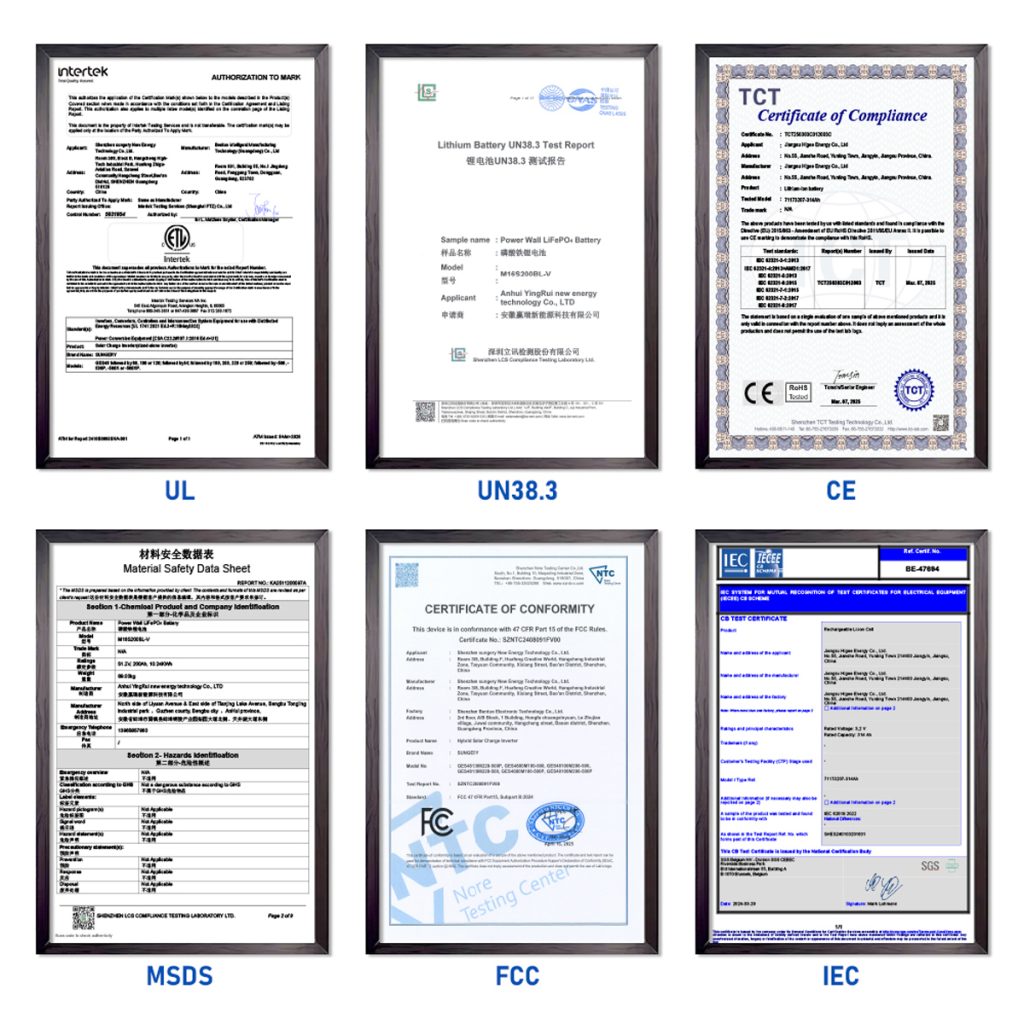
For a US-standard hybrid solar system, confirm the exact inverter and battery models, output configuration, applicable certification requirements, and supporting documents before placing an order.
4. Matching the System to Real Energy Needs
A practical system design starts with three questions:
What needs to stay powered? Separate essential loads from equipment that can be switched off during an outage.
How long must the battery last? Estimate energy consumption during the expected backup period.
Can the components work together? Check inverter output, battery voltage, communication protocols, and charging limits.
These checks help installers and project developers avoid choosing equipment based on power ratings alone.
Toyon Energy's 5–50kW hybrid inverter and battery options provide different configurations to evaluate for residential and small commercial applications.