


Table of Contents
On September 4, seven government departments, including the Cyberspace Administration of China and the National Development and Reform Commission, issued the Implementation Plan for Promoting the Coordinated Transformation and Development of Digitalization and Green Development (2026–2030).
The energy sector has focused on one key message: guiding computing resources toward regions rich in green electricity, with green power consumption by computing facilities and other key sectors reaching the green electricity consumption responsibility weight of their respective provinces.
In other words, computing power needs green electricity—and this is becoming a hard requirement.
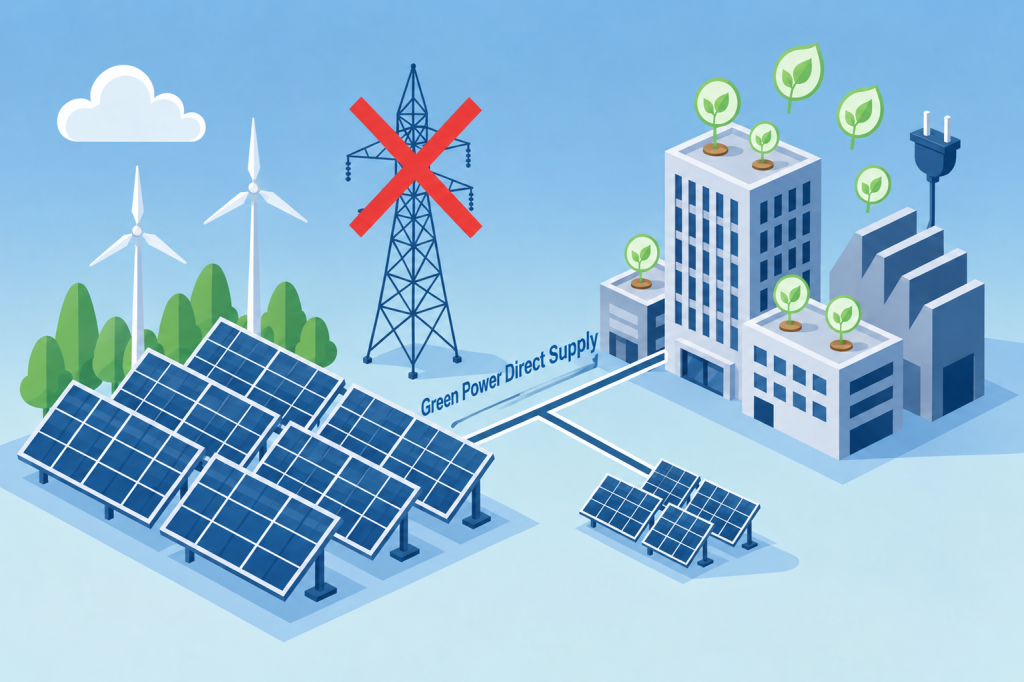
For enterprises, however, the real value of this policy lies not simply in the word “computing power,” but in two emerging business models: green power direct supply and behind-the-meter energy storage.
New Business Model 1: Green Power Direct Supply — From “Buying Green Power” to “Building Green Power”
In May 2026, the National Development and Reform Commission and the National Energy Administration issued the Notice on the Orderly Promotion of Multi-User Green Power Direct Supply, expanding green power direct supply from a “single-user” model to a “multi-user” model.
Under the new model, renewable energy projects can supply electricity directly to multiple users within an industrial park through dedicated lines without passing through the public grid. Projects should be planned according to the principle of “source determined by load,” with annual self-generation and self-consumption electricity generally accounting for no less than 60% of total available generation.
Computing facilities, industrial parks, and zero-carbon parks are all specifically identified as potential application scenarios.
In simple terms:
“The park generates its own green power, consumes it locally, and tracks its green attributes.”
A national-level compliant pathway is taking shape.
For large electricity consumers, this represents a shift from “buying green power” to “building and managing green power.” Instead of treating electricity bills as a continuous operating expense, enterprises can turn part of their energy consumption into their own power-generation assets.
New Business Model 2: Behind-the-Meter Energy Storage — From “Cost Item” to “Revenue-Generating Asset”
Computing facilities operate as 24/7 continuous loads, while solar and wind generation depend on weather conditions. Energy storage therefore plays a critical role in bridging the gap between renewable generation and continuous electricity demand.
The implementation plan also calls for breakthroughs in coordinated scheduling between computing power and electricity consumption, as well as long-duration and large-capacity energy storage technologies.
At the enterprise level, the model is straightforward:
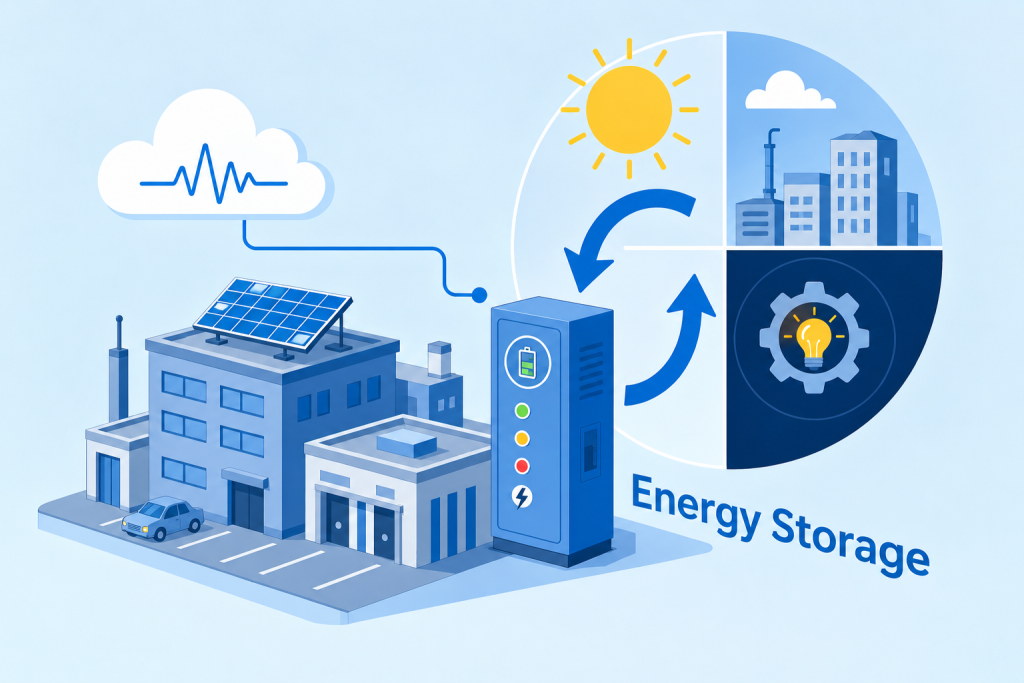
During the day, when solar generation is high and electricity prices are higher, excess solar power can be stored in batteries after meeting on-site demand.
At night, enterprises can use low-tariff electricity and discharge stored energy to support continuous production.
As relevant policies continue to develop, behind-the-meter energy storage systems can also participate in virtual power plant aggregation and demand response, potentially transforming energy storage from a cost item into a flexible asset capable of generating additional revenue.
It is foreseeable that “rooftop solar + behind-the-meter energy storage” will gradually become a standard configuration for new commercial and industrial energy systems, rather than relying on standalone solar PV.
This is also an important reason why the self-generation and self-consumption model remains resilient following the market-oriented reform of electricity pricing under Document No. 136.
For enterprises in Anhui, this trend is particularly worth watching. Anhui is both a major province for commercial and industrial solar PV and an important hub for computing power. As local demand for green electricity continues to rise, demonstration scenarios for green power direct supply and behind-the-meter energy storage are increasingly within reach.
The Key to Commercial Implementation: One-Stop Project Delivery
For these new business models to move from policy documents into actual factory buildings, enterprises need one-stop implementation capabilities.
Toyon Energy closely monitors industry developments and has strong capabilities in policy interpretation. The company can quickly translate new policies on green power direct supply, behind-the-meter energy storage, and related mechanisms into practical energy opportunities for enterprises, delivering green energy solutions that combine innovation with feasibility.
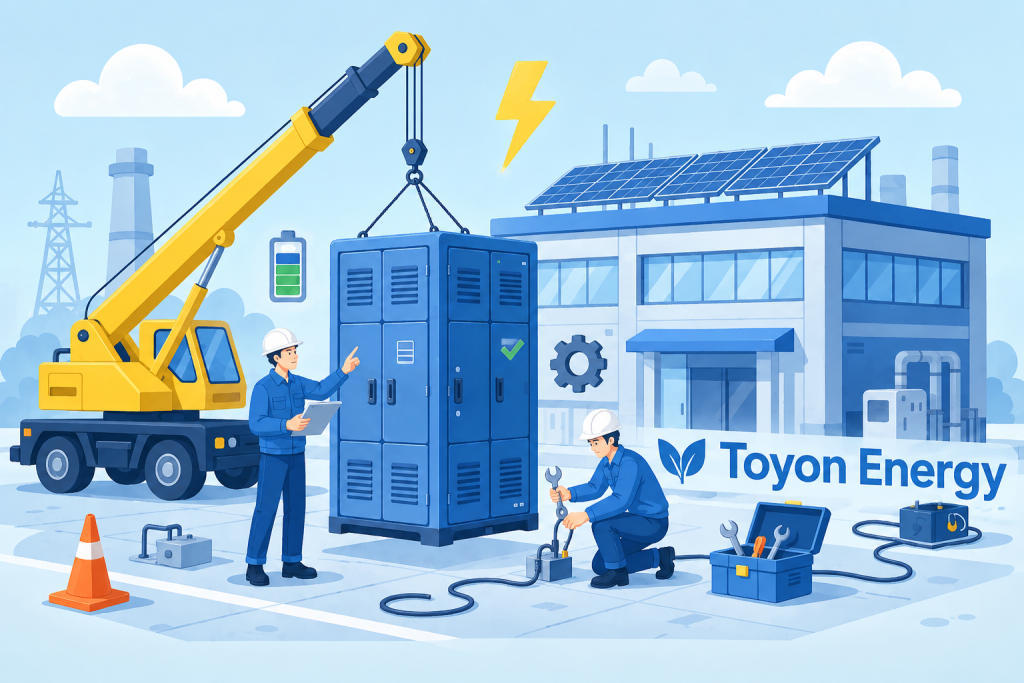
Toyon Energy provides one-stop services covering project development, solution design, EPC construction, and smart energy operation and maintenance.Its commercial and industrial project portfolio covers a variety of application scenarios, including:
- 5.7 MWp distributed PV rooftop projects at Dafu Intelligent Park in Bengbu, Anhui
- 2.08 MWp “solar + energy storage” integrated project for Anhui Dongyi New Materials
- “Solar + Storage + EV Charging” projects at parking facilities such as Nanbang in Funan
In 2026, the company is also investing in and developing multiple solar-plus-storage projects, connecting them to a smart energy management platform while reserving capabilities for future virtual power plant functions.
The integrated model of “investment + construction + operation” is highly aligned with the emerging business models of green power direct supply, energy storage, and demand response.
Green Power Direct Supply Opens the Door. Energy Storage Completes the Loop.
Green power direct supply opens up a new channel for enterprises to access and manage renewable energy, while energy storage helps complete the energy management loop.
Planning the rooftop, electricity load, and energy storage system together today means using today’s investment to secure electricity cost and green-certificate advantages for the next decade.