


المحتويات
For factories in Costa Rica, electricity is more than a utility expense. It directly affects production costs, operating margins, and long-term competitiveness. Manufacturing plants, food processing facilities, warehouses, and other commercial operations often consume significant amounts of electricity during the working day.
A commercial solar system can help businesses reduce their reliance on grid electricity by generating power on-site. However, the real savings depend on when a factory uses electricity, how its solar system is designed, and how local grid charges and surplus energy arrangements apply.
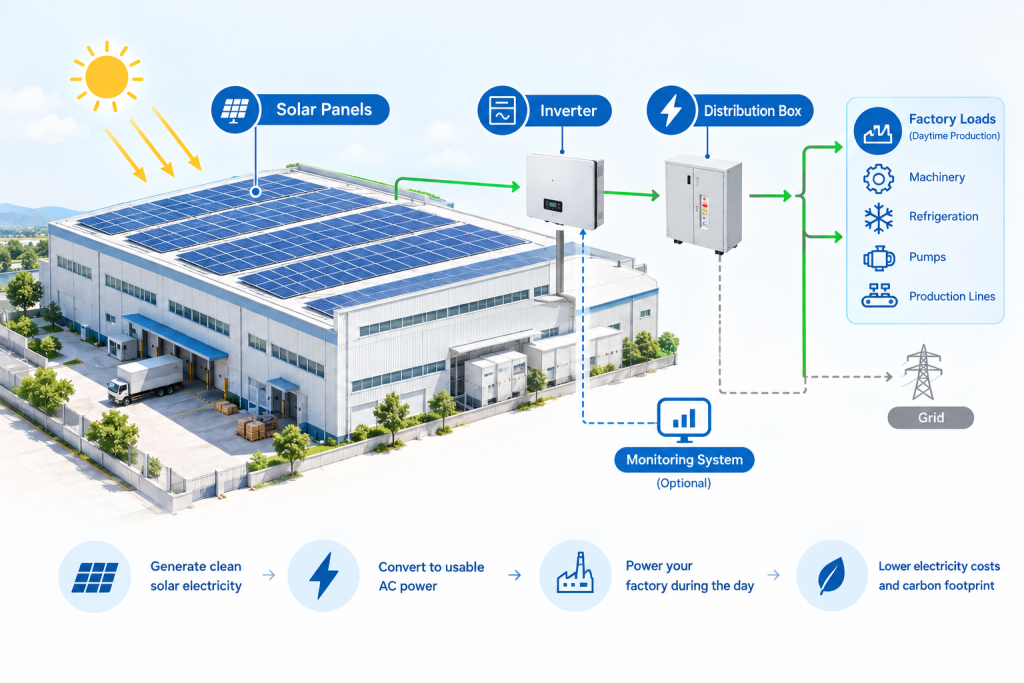
1. Start with Your Factory's Electricity Consumption
A commercial rooftop solar PV system can help factories in Costa Rica use available roof space to generate electricity for daytime production. Before selecting system capacity, businesses should review electricity bills, operating schedules, roof conditions, and peak consumption to determine how much solar power they can use directly.
Pay attention to three questions:
- How much electricity does your factory consume each month?
- How much power does it use during daylight hours?
- Does electricity demand change significantly between production shifts, weekends, and seasonal periods?
Factories that operate machinery, refrigeration, pumps, or production lines during daylight hours may be well positioned to use solar electricity directly.
For example, a food processing plant with daytime refrigeration and production loads may consume a large portion of its solar generation on-site. A facility that operates mainly at night may require a different system design or may benefit less from solar without storage.
The goal is not simply to install the largest possible system. It is to match solar generation with actual electricity demand.
2. Choose the Right Commercial Solar System Size
An oversized system can generate surplus electricity that the factory cannot fully use when it is produced. This may reduce the project's financial attractiveness, especially when exported energy receives different treatment from self-consumed electricity.
A properly sized commercial solar power system should consider:
- Historical electricity consumption and demand patterns
- Available rooftop or ground-mounted installation space
- Roof condition, shading, and structural capacity
- Inverter capacity and electrical infrastructure
- Applicable utility interconnection requirements
- Expected changes in production and future expansion
In Costa Rica, distributed energy rules and grid-related charges can affect the economics of solar projects. Businesses should confirm the current requirements with their electricity distributor and relevant regulator before finalizing a design. The CNFL, for example, publishes procedures and technical information for distributed energy resources connected within its service area.
3. Should Your Factory Add Battery Energy Storage?
Solar panels generate electricity during daylight hours, but a factory may also need power after sunset or during periods when solar production is low.
For factories with evening operations, variable electricity demand, or critical equipment that requires backup power, a C&I battery energy storage system may provide additional flexibility. The decision should be based on the facility’s load profile, applicable electricity tariffs, backup requirements, and the total cost of ownership.
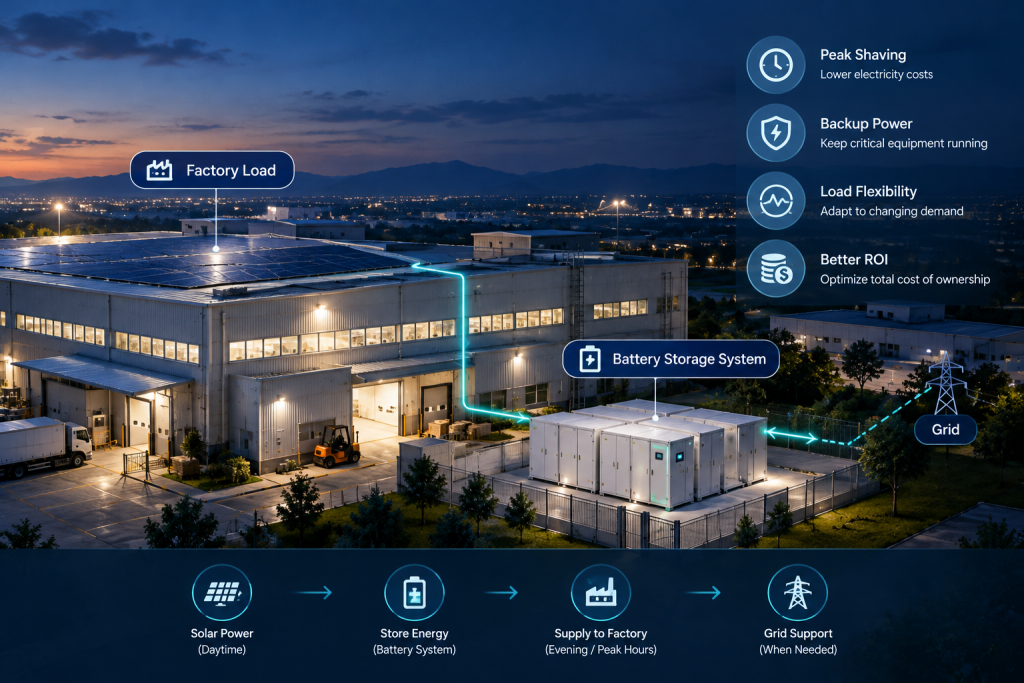
Battery storage is worth evaluating when a factory:
- Has substantial electricity demand outside solar generation hours
- Needs backup power for critical equipment
- Wants to manage certain peak-demand periods
- Has specific energy management or power continuity requirements
However, batteries add capital costs and require careful sizing. They are not automatically the most economical choice for every factory. Compare the expected value of stored energy and backup capability with battery costs, efficiency losses, maintenance, and the applicable electricity tariff.
4. Calculate the Return on Investment Before Buying
The financial case for commercial solar should be based on realistic savings rather than headline performance figures.
A useful starting point is:
Simple payback period = Net project cost ÷ Estimated annual net savings
Net project cost may include solar panels, inverters, mounting structures, electrical upgrades, engineering, installation, and interconnection work, less any confirmed incentives or financial support.
Annual net savings should account for the value of self-consumed electricity, any eligible compensation for exported energy, ongoing maintenance, and applicable grid charges.
Costa Rica's distributed generation framework includes specific provisions for self-consumption and surplus electricity. The financial treatment depends on the applicable arrangement, so do not assume that every exported kilowatt-hour is credited at the same value as electricity purchased from the grid.
Ask your supplier for a project-specific financial model using your actual electricity data, clearly stated assumptions, and more than one operating scenario.
5. Choose a Solution That Fits Your Operations
Every factory has different electricity consumption patterns, production schedules, and energy requirements. Some facilities may achieve good results with a solar panel alone, while others may require a more integrated commercial solar and battery storage solution to improve energy flexibility and support operations beyond daylight hours.
A complete solar-plus-storage solution can combine solar panels, battery energy storage systems, inverters, and energy management systems (EMS) to help businesses better manage electricity generation and consumption.
When evaluating the right solution, factories should consider:
- Daily electricity usage patterns and production hours
- The percentage of electricity that can be consumed directly from solar generation
- Whether backup power is required for critical equipment
- Future production expansion and additional energy demand
- Compatibility between solar panels, inverters, batteries, and energy management systems
For some factories, installing solar PV first and adding battery storage later may be a practical approach. For facilities with higher power continuity requirements or significant electricity usage outside solar generation hours, integrating battery storage from the beginning may provide greater long-term value.
The best system design is not always the largest one. It is the solution that matches the factory’s actual operating conditions, energy goals, and future development plans.
Reduce Your Factory's Electricity Costs with a Better Solar Strategy
Commercial solar power can help Costa Rican factories manage electricity expenses, but the strongest business case starts with consumption data, realistic system sizing, and a clear understanding of local grid arrangements.
طويون للطاقة supports commercial and industrial projects with solar PV systems, battery energy storage solutions, and integrated solar-plus-storage configurations.
Planning a factory solar project in Costa Rica? Contact Toyon Energy to discuss your project requirements, equipment selection, and a suitable C&I energy solution.