


المحتويات
Planning a commercial solar installation requires more than comparing equipment prices. For factories, warehouses, and industrial facilities, system performance depends on electricity demand, roof conditions, grid capacity, and the way energy is used throughout the day.
Following a commercial solar project checklist before requesting proposals helps businesses identify potential risks, compare quotes fairly, and select a system that fits their operational needs.
1. What Is Your Main Project Objective?
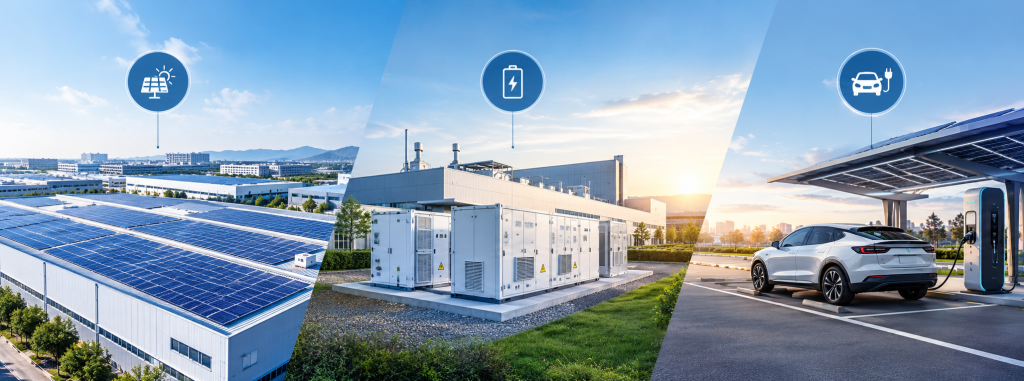
Start by defining your priorities. A factory operating production lines during daylight hours may want to reduce electricity bills, while a facility with critical equipment may also need backup power. A commercial EV charging station might need solar generation and battery storage to manage high charging demand.
Your objective determines whether a standard commercial PV system or a solution combining solar, battery energy storage, and intelligent energy management is more suitable.
2. How Much Electricity Does Your Facility Consume?
Prepare 12 months of electricity bills and, if available, interval consumption data. A factory running multiple shifts may have a different load profile from a warehouse that operates mainly during business hours. Cold storage facilities, meanwhile, may require relatively consistent electricity around the clock.
Understanding these patterns helps estimate how much solar power can be consumed on-site and whether battery storage could improve energy utilization.
3. Is Your Roof or Available Land Suitable?
For rooftop projects, assess structural capacity, shading, roof age, waterproofing, and access for maintenance. An older factory roof may require repairs or reinforcement before installation, while a warehouse roof may have skylights, ventilation equipment, or restricted areas that reduce usable space.
Ask how installation work could affect the existing roof warranty and whether a structural inspection is required.
4. What System Capacity Does Your Facility Need?
System size should reflect actual electricity demand, available installation space, solar resources, and grid export limits—not simply the maximum number of panels that fit.
For example, a factory that operates from Monday to Friday may generate excess solar electricity during weekend shutdowns. Before increasing system capacity, compare expected self-consumption, export arrangements, and the potential value of battery storage.
5. Are the Panels, Inverters, and Batteries Compatible?
Request exact equipment models, technical datasheets, and quantities. If you are adding batteries to an existing commercial PV system, ask whether AC coupling or DC coupling is more appropriate and confirm compatibility between the inverter, battery, and energy management system (EMS).
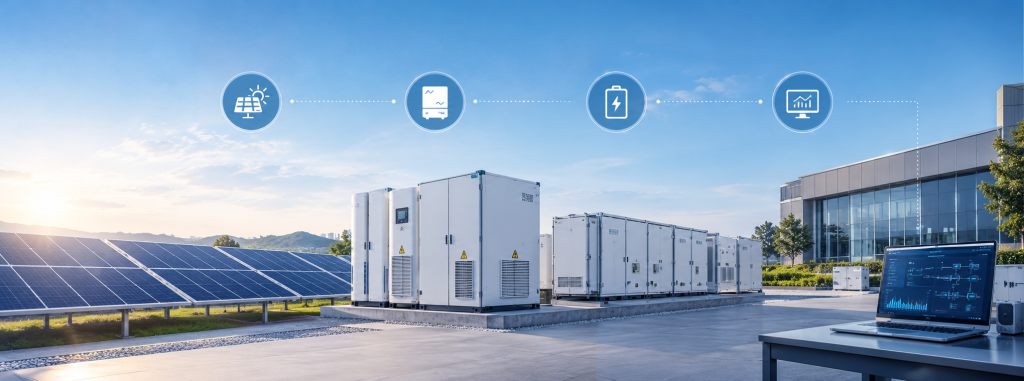
For projects with multiple inverters or battery clusters, clarify communication requirements, expansion options, and coordinated system control.
6. What Is Included in the Commercial Solar System Cost?
Ask for an itemized quote covering solar modules, inverters, batteries, mounting structures, engineering, installation, cabling, electrical upgrades, grid connection, and commissioning.
For example, an industrial facility may need switchgear upgrades or additional cabling, while a rooftop project may require reinforcement or specialized mounting. Confirm exclusions and potential additional costs before comparing suppliers. A lower initial quote does not necessarily mean a lower total project cost.
7. How Much Energy Will the System Generate and Save?
Request a generation estimate that explains its assumptions, including local solar conditions, shading, system losses, and equipment performance.
For a factory, the financial model should distinguish between solar electricity used during production hours and surplus electricity exported to the grid. If the site has demand charges or time-of-use tariffs, ask how these affect projected savings. Test different scenarios rather than relying on a single payback estimate.
8. Can the Grid Support Your Proposed System?
Grid capacity, export restrictions, and local permitting requirements can affect both project size and installation schedules.
This is particularly important for industrial parks with limited grid capacity and EV charging stations where several chargers may operate simultaneously. Ask whether export control, battery storage, or EMS-based load management could help meet the site's requirements, and clarify who handles utility applications and approvals.
9. What Do the Equipment and Installation Warranties Cover?
Review separate warranty terms for solar modules, inverters, batteries, mounting systems, and installation workmanship. Check exclusions, claim procedures, service availability, and responsibility for replacement labor or transportation.
For facilities operating in hot, humid, dusty, or coastal environments, also ask whether the proposed equipment is suitable for the site's conditions. Warranty duration matters, but so does the practical process for obtaining support.
10. Who Will Monitor and Maintain the System?
Ask whether remote monitoring, performance reporting, preventive maintenance, troubleshooting, and technical support are included in the proposal.
For a business with several facilities, centralized monitoring may help identify performance issues across different sites. For a solar-plus-storage project, confirm how the EMS monitors battery operation and coordinates charging and discharging. Choose a C&I solar system supplier that can explain its service process, provide relevant project references, and clearly define ongoing support responsibilities.
Prepare for a More Accurate Solar Quote
A successful commercial solar project starts with clear objectives, reliable energy consumption data, and a well-defined technical plan. Before requesting a quote, prepare your electricity records, site information, project requirements, and expected timeline. Providing these details helps suppliers develop more accurate proposals and makes it easier to compare system performance, equipment quality, and overall project value.
في طويون للطاقة, we provide commercial and industrial solar and energy storage solutions designed to meet diverse business energy needs. Whether you are planning a new C&I solar installation or exploring solar-plus-storage integration, our team can help you evaluate suitable system configurations and identify a solution aligned with your project's requirements and long-term energy goals.