


Table of Contents
As energy costs continue to rise and grid reliability becomes a growing concern, more businesses are turning to solar PV + battery energy storage systems as a smarter way to manage electricity consumption. In 2026, the combination of renewable power generation and advanced energy storage is becoming a key solution for companies looking to reduce energy costs, improve power reliability, and achieve greater energy independence.
A commercial solar battery storage system allows businesses to store excess solar energy generated during the day and use it when electricity demand is high or grid power is unavailable. This makes solar energy more flexible and helps companies maximize the value of their renewable energy investment.
Rising Energy Costs Drive Businesses Toward Solar + Storage
One of the main reasons companies are adopting solar plus battery storage systems is the increasing pressure from electricity prices. Many commercial and industrial users face high peak electricity rates, demand charges, and unstable energy costs.
By integrating a battery energy storage system (BESS) with solar PV, businesses can reduce their dependence on expensive grid electricity. During periods of low electricity prices or high solar generation, the battery system can store energy. During peak demand periods, stored energy can be discharged to reduce electricity expenses.
This process, known as peak shaving energy storage, helps factories, commercial buildings, and industrial facilities optimize their energy consumption and lower operational costs.
Improving Energy Reliability with Battery Storage
Power interruptions can cause significant financial losses for businesses, especially in industries such as manufacturing, data centers, healthcare, and mining. A commercial battery energy storage system provides reliable backup power and helps companies maintain continuous operations during grid failures.
Unlike traditional diesel generators, a solar battery storage system can respond instantly to power interruptions and operate with lower maintenance requirements. When combined with solar panels, businesses can create a more resilient energy system capable of supporting long-term power needs.
For companies operating in areas with unstable grids, solar and battery storage solutions for commercial applications provide a practical approach to improving energy security.
Supporting Energy Independence and Sustainability Goals
Many companies are now focusing on reducing carbon emissions and meeting sustainability targets. Solar PV systems help businesses generate clean electricity, while battery storage improves renewable energy utilization.
A solar PV and battery energy storage system enables businesses to use more of their own generated power instead of relying heavily on fossil fuel-based electricity. This is especially valuable for companies seeking to reduce carbon footprints while maintaining reliable energy supply.
In addition, businesses can combine solar storage systems with microgrid energy solutions to achieve greater control over their energy resources. These systems are widely used in industrial parks, remote facilities, and commercial buildings.
Advanced BESS Technology Makes Solar Storage More Efficient
The rapid development of battery technology is another important factor driving adoption in 2026. Modern commercial and industrial BESS solutions now offer higher energy density, improved safety, and smarter energy management capabilities.
Advanced systems equipped with Battery Management Systems (BMS), Energy Management Systems (EMS), and liquid cooling technology provide better battery performance and longer service life. Large-scale liquid cooled BESS containers are becoming increasingly popular for industrial energy storage projects because they can maintain stable operating temperatures and improve system efficiency.
Why Businesses Are Investing in Solar + BESS in 2026
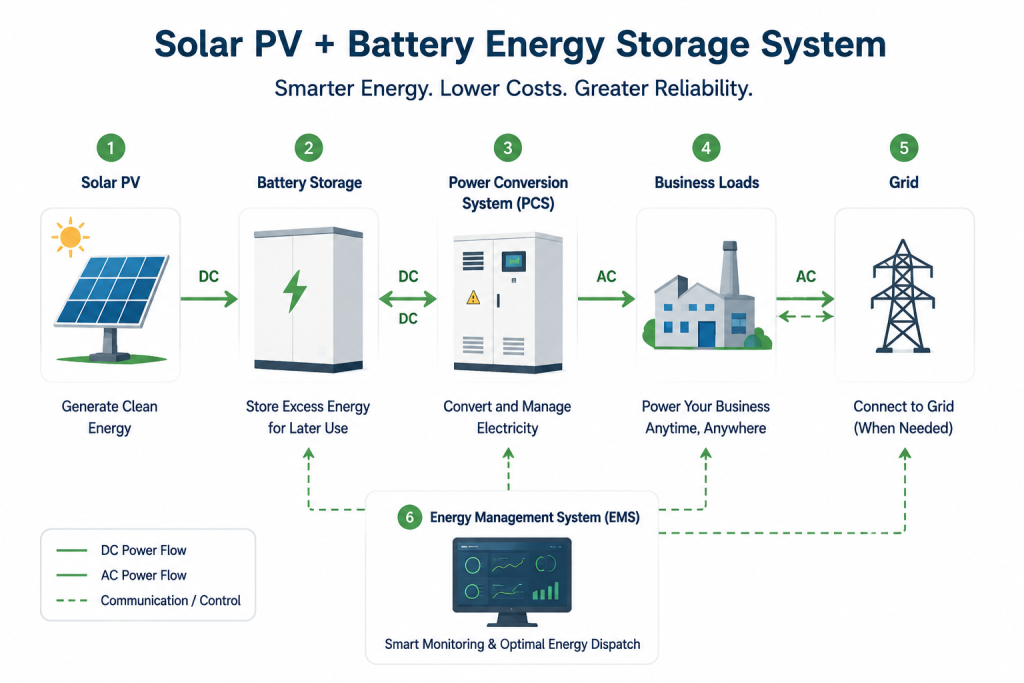
The combination of solar PV and battery storage offers multiple benefits:
- Lower electricity costs through peak shaving and energy optimization
- Reliable backup power during grid outages
- Higher utilization of renewable energy
- Reduced carbon emissions
- Greater energy independence
- Flexible solutions for commercial, industrial, and microgrid applications
As energy markets continue to change, solar battery storage systems for businesses are becoming more than just an alternative energy solution. They are becoming an essential tool for companies seeking cost savings, operational stability, and sustainable growth.
In 2026 and beyond, the integration of solar PV with battery energy storage systems will continue to accelerate, helping businesses build smarter, cleaner, and more resilient energy infrastructures. For companies planning their next energy investment, adopting a reliable commercial solar energy storage solution is becoming a strategic decision rather than simply an environmental choice.
Frequently Asked Questions
1. Can a solar PV + battery storage system reduce business operating costs?
Yes. A solar PV + BESS system can reduce operating costs by lowering electricity purchases from the grid and helping businesses avoid expensive peak electricity rates.
For commercial and industrial facilities with high daytime energy demand, battery storage can support peak shaving, allowing companies to use stored solar energy during periods when electricity prices are highest.
2. How does a solar PV and battery energy storage system work?
A typical solar PV + battery storage system works through four steps:
Solar panels generate electricity during daylight hours.
The inverter converts solar power into usable AC electricity for business operations.
Excess solar energy is stored in the battery system.
Stored energy is discharged when solar generation is low, electricity prices increase, or the grid fails.
This allows businesses to achieve more stable and efficient energy management.
3. What is the ROI of a commercial solar PV + battery storage system?
The return on investment depends on electricity prices, solar resources, battery capacity, usage patterns, and local incentives.
Businesses can improve ROI through:
Reducing electricity bills
Peak demand management
Increasing renewable energy usage
Avoiding downtime losses
Extending energy independence
Many commercial projects achieve better financial returns when solar PV and battery storage are designed together rather than separately.
4. How can businesses choose the right solar PV and battery storage solution?
Businesses should evaluate:
Current electricity consumption
Future energy demand
Available installation space
Grid reliability
Backup power requirements
Budget and investment goals
Working with an experienced solar and energy storage provider can help design a customized solution that delivers the best balance between cost savings and energy reliability.
5. Are commercial battery storage systems safe?
Yes. Modern commercial battery storage systems use advanced battery management systems (BMS) and multiple safety protections, including:
Temperature monitoring
Overcharge and over-discharge protection
Short-circuit protection
Fire safety design
Intelligent monitoring systems
Professional installation and proper system design are essential for safe operation.