


المحتويات
As energy costs continue to rise and grid reliability becomes a growing concern, more businesses are turning to solar PV + battery energy storage systems as a smarter way to manage electricity consumption. In 2026, the combination of renewable power generation and advanced energy storage is becoming a key solution for companies looking to reduce energy costs, improve power reliability, and achieve greater energy independence.
A commercial solar battery storage system allows businesses to store excess solar energy generated during the day and use it when electricity demand is high or grid power is unavailable. This makes solar energy more flexible and helps companies maximize the value of their renewable energy investment.
ارتفاع تكاليف الطاقة يدفع الشركات نحو الطاقة الشمسية وأنظمة التخزين
One of the main reasons companies are adopting solar plus battery storage systems is the increasing pressure from electricity prices. Many commercial and industrial users face high peak electricity rates, demand charges, and unstable energy costs.
By integrating a battery energy storage system (BESS) with الطاقة الشمسية الكهروضوئية, businesses can reduce their dependence on expensive grid electricity. During periods of low electricity prices or high solar generation, the battery system can store energy. During peak demand periods, stored energy can be discharged to reduce electricity expenses.
This process, known as peak shaving energy storage, helps factories, commercial buildings, and industrial facilities optimize their energy consumption and lower operational costs.
تحسين موثوقية الطاقة باستخدام تخزين البطاريات
Power interruptions can cause significant financial losses for businesses, especially in industries such as manufacturing, data centers, healthcare, and mining. A commercial battery energy storage system provides reliable backup power and helps companies maintain continuous operations during grid failures.
Unlike traditional diesel generators, a solar battery storage system can respond instantly to power interruptions and operate with lower maintenance requirements. When combined with solar panels, businesses can create a more resilient energy system capable of supporting long-term power needs.
For companies operating in areas with unstable grids, solar and battery storage solutions for commercial applications provide a practical approach to improving energy security.
دعم الاستقلال الطاقي وأهداف الاستدامة
Many companies are now focusing on reducing carbon emissions and meeting sustainability targets. Solar PV systems help businesses generate clean electricity, while battery storage improves renewable energy utilization.
A solar PV and battery energy storage system enables businesses to use more of their own generated power instead of relying heavily on fossil fuel-based electricity. This is especially valuable for companies seeking to reduce carbon footprints while maintaining reliable energy supply.
In addition, businesses can combine solar storage systems with microgrid energy solutions to achieve greater control over their energy resources. These systems are widely used in industrial parks, remote facilities, and commercial buildings.
تكنولوجيا أنظمة تخزين الطاقة المتقدمة تجعل تخزين الطاقة الشمسية أكثر كفاءة
The rapid development of battery technology is another important factor driving adoption in 2026. Modern commercial and industrial BESS solutions now offer higher energy density, improved safety, and smarter energy management capabilities.
Advanced systems equipped with Battery Management Systems (BMS), Energy Management Systems (EMS), and liquid cooling technology provide better battery performance and longer service life. Large-scale liquid cooled BESS containers are becoming increasingly popular for industrial energy storage projects because they can maintain stable operating temperatures and improve system efficiency.
لماذا تستثمار الشركات في الطاقة الشمسية مع أنظمة تخزين بطاريات الطاقة في عام 2026
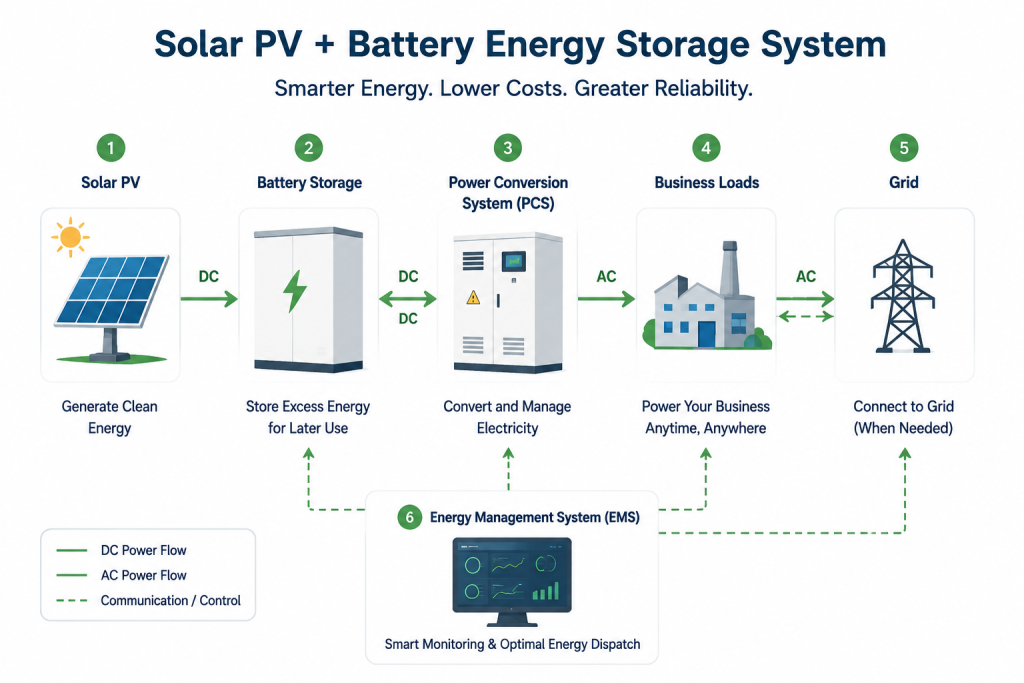
The combination of solar PV and battery storage offers multiple benefits:
- Lower electricity costs through peak shaving and energy optimization
- Reliable backup power during grid outages
- Higher utilization of renewable energy
- انبعاثات الكربون المخفضة
- استقلال أكبر في مجال الطاقة
- Flexible solutions for commercial, industrial, and microgrid applications
As energy markets continue to change, solar battery storage systems for businesses are becoming more than just an alternative energy solution. They are becoming an essential tool for companies seeking cost savings, operational stability, and sustainable growth.
In 2026 and beyond, the integration of solar PV with battery energy storage systems will continue to accelerate, helping businesses build smarter, cleaner, and more resilient energy infrastructures. For companies planning their next energy investment, adopting a reliable commercial solar energy storage solution is becoming a strategic decision rather than simply an environmental choice.
الأسئلة الشائعة
1. هل يمكن لنظام الطاقة الشمسية الكهروضوئية مع تخزين البطاريات أن يقلل من تكاليف التشغيل التجارية؟
نعم. يمكن لنظام الطاقة الشمسية الكهروضوئية مع نظام تخزين البطاريات (BESS) خفض تكاليف التشغيل عن طريق تقليل شراء الكهرباء من الشبكة ومساعدة الشركات على تجنب أسعار الكهرباء الباهظة خلال أوقات الذروة.
بالنسبة للمرافق التجارية والصناعية ذات الطلب المرتفع على الطاقة خلال النهار، يمكن لتخزين البطاريات أن يدعم خفض ذروة الأحمال، مما يسمح للشركات باستخدام الطاقة الشمسية المخزنة خلال الفترات التي تكون فيها أسعار الكهرباء في أعلى مستوياتها.
٢. كيف يعمل نظام الطاقة الشمسية الكهروضوئية وتخزين الطاقة بالبطاريات؟
يعمل نظام الطاقة الشمسية الكهروضوئية مع تخزين البطاريات النموذجي عبر أربع خطوات:
تولد الألواح الشمسية الكهرباء خلال ساعات النهار.
يحول العمحول (الإنفرتر) الطاقة الشمسية إلى كهرباء متناوبة (AC) قابلة للاستخدام في العمليات التجارية.
يتم تخزين طاقة الشمس الزائدة في نظام البطاريات.
يتم تفريغ الطاقة المخزنة عندما يكون التوليد الشمسي منخفضًا، أو ترتفع أسعار الكهرباء، أو يتعطل الشبكة.
يسمح هذا للشركات بتحقيق إدارة طاقة أكثر استقراراً وكفاءة.
3. ما هو العائد على الاستثمار (ROI) لنظام الطاقة الشمسية الكهروضوئية التجاري مع تخزين البطاريات؟
يعتمد العائد على الاستثمار على أسعار الكهرباء، وموارد الطاقة الشمسية، وسعة البطاريات، أنماط الاستخدام، والتحفيزات المحلية.
يمكن للشركات تحسين العائد على الاستثمار (ROI) من خلال:
خفض فواتير الكهرباء
إدارة ذروة الطلب
زيادة استخدام الطاقة المتجددة
تجنب خسائر وقت التوقف
توسيع استقلال الطاقة
تحقق العديد من المشاريع التجارية عوائد مالية أفضل عندما يتم تصميم الطاقة الشمسية الكهروضوئية وتخزين البطاريات معاً بدلاً من تصميمهما بشكل منفصل.
4. كيف يمكن للشركات اختيار حل الطاقة الشمسية الكهروضوئية وتخزين البطاريات المناسب؟
يجب على الشركات تقييم:
استهلاك الكهرباء الحالي
طلب الطاقة المستقبلي
مساحة التثبيت المتاحة
موثوقية الشبكة
متطلبات طاقة الاحتياط
الميزانية وأهداف الاستثمار
العمل مع مزود ذو خبرة في مجال الطاقة الشمسية وتخزين الطاقة يمكن أن يساعد في تصميم حل مخصص يحقق أفضل توازن بين توفير التكاليف وموثوقية الطاقة.
5. هل أنظمة تخزين البطاريات التجارية آمنة؟
نعم. تستخدم أنظمة تخزين البطاريات التجارية الحديثة أنظمة إدارة بطاريات متقدمة (BMS) وحماية متعددة للسلامة، بما في ذلك:
مراقبة درجة الحرارة
حماية من الشحن الزائد والتفريغ الزائد
حماية من قصر الدائرة
تصميم السلامة من الحريق
أنظمة المراقبة الذكية
التركيب الاحترافي وتصميم النظام السليم ضروريان للتشغيل الآمن.