


Table of Contents
As electricity costs rise and grid capacity becomes increasingly limited, more factories, warehouses, commercial buildings, and industrial facilities are turning to C&I energy storage systems to control energy costs and improve power reliability. An Outdoor BESS Cabinet provides a compact way to store and manage electricity directly at the point of consumption.
But how does an outdoor BESS cabinet actually work, and is it suitable for your business?
What Is an Outdoor BESS Cabinet?
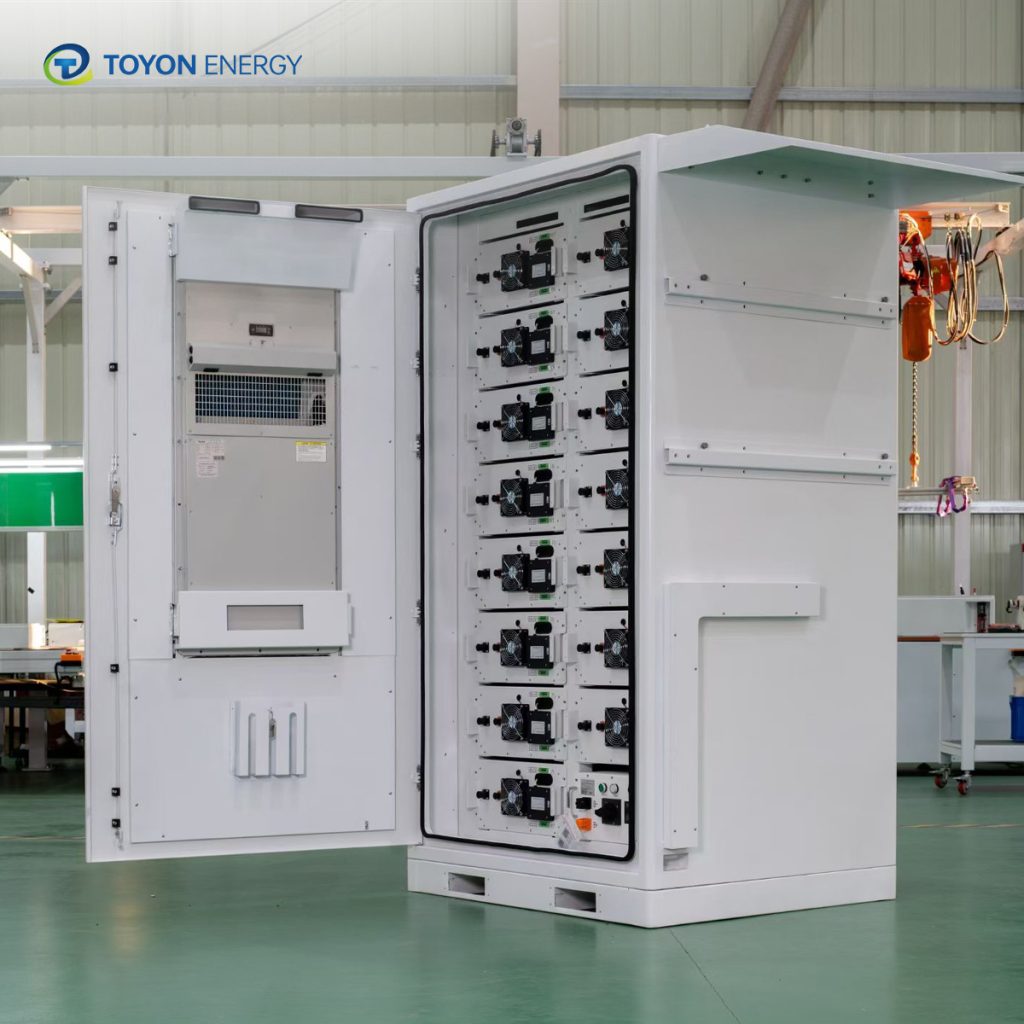
An Outdoor BESS Cabinet is an integrated Battery Energy Storage System (BESS) designed for outdoor installation. Instead of installing batteries, PCS, EMS, cooling, and safety equipment separately, these components can be integrated into one cabinet.
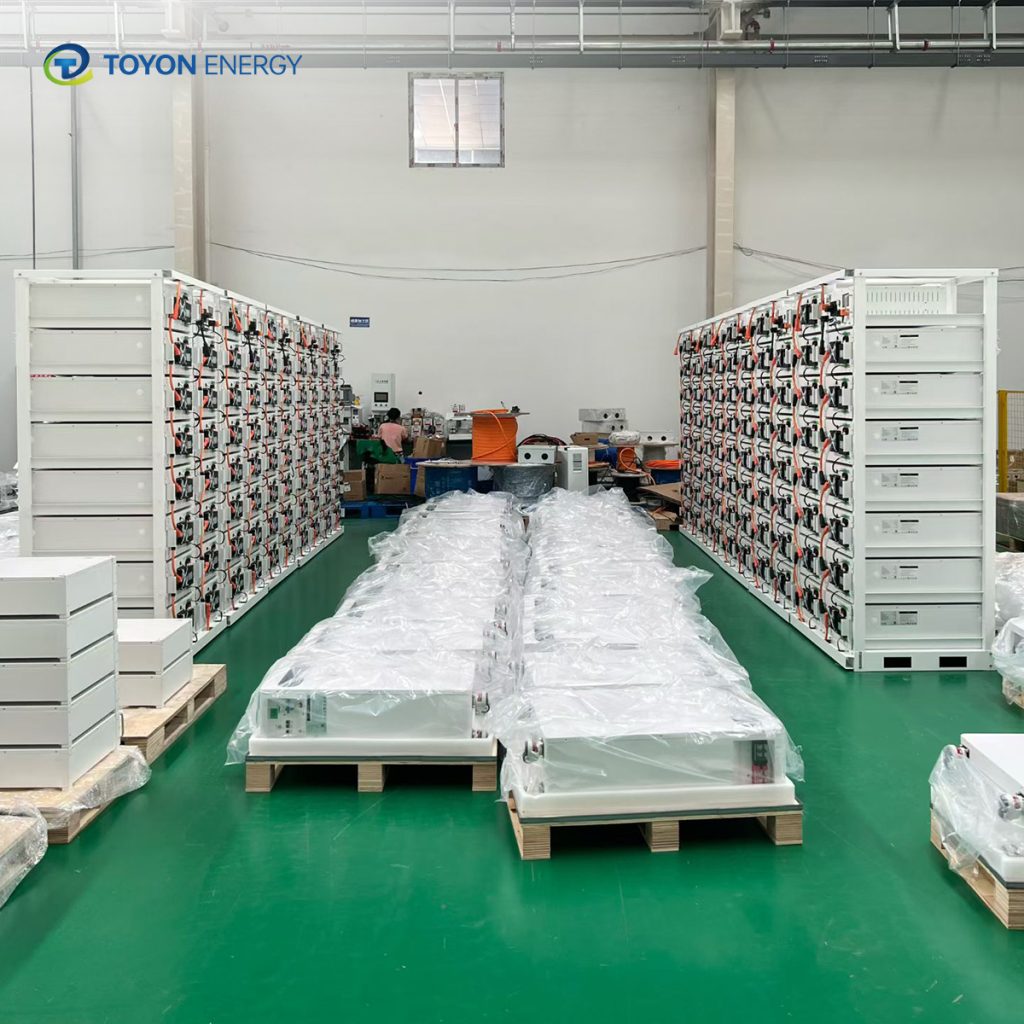
A typical system includes LFP batteries, a Battery Management System (BMS), Power Conversion System (PCS), Energy Management System (EMS), thermal management, fire protection, and monitoring functions. This integrated structure can simplify transportation, installation, commissioning, and maintenance.
How Does an Outdoor BESS Cabinet Work?
The working process is relatively simple:
Grid / Solar PV → BESS Charging → Energy Storage → EMS Control → BESS Discharging → Factory or Building Loads
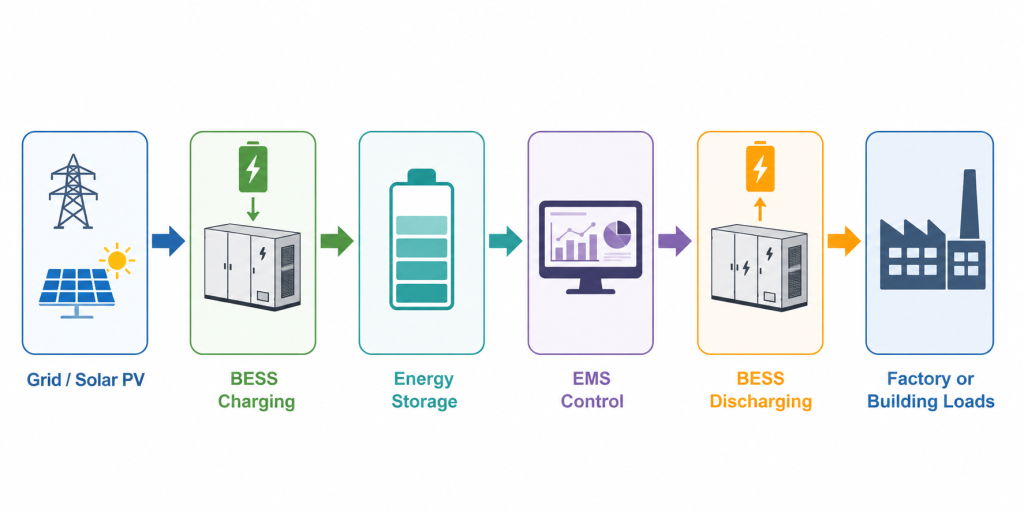
During periods of low electricity prices or high solar generation, the BESS charges the battery. When electricity prices increase or site demand approaches a preset peak, the EMS instructs the PCS to discharge stored energy to the load.
For example, if a factory suddenly increases its power demand, the BESS can discharge electricity to reduce the amount of power drawn from the grid. This strategy, known as peak shaving, can help businesses reduce demand-related electricity costs.
What Are the Main Benefits for C&I Users?
1. Reduce Peak Electricity Costs
Peak shaving is one of the most important applications of C&I BESS. The system monitors electricity demand and automatically discharges during high-demand periods, helping keep grid consumption below a predefined limit.
2. Store Excess Solar Energy
When combined with rooftop solar, an Outdoor BESS Cabinet can store surplus daytime solar generation and release it when solar output decreases. This improves solar self-consumption and reduces reliance on grid electricity.
3. Provide Backup Power
For factories, data centers, warehouses, and other facilities with critical loads, stored energy can provide backup power during grid interruptions. The actual backup duration depends on battery capacity, load power, and system configuration.
4. Improve Energy Management
The EMS coordinates the battery, PCS, solar system, grid, and site loads. It can automatically manage charging and discharging according to electricity prices, load demand, solar generation, and backup requirements.
Is an Outdoor BESS Cabinet Safe and Weatherproof?
For outdoor applications, enclosure protection and thermal management are critical. Depending on the design, outdoor cabinets can use high IP-rated enclosures, temperature control, battery monitoring, and fire protection systems to support reliable operation in different environmental conditions.
How Do You Choose the Right Outdoor BESS?
The right system should not be selected based on battery capacity alone. Businesses should consider:
- Peak load: How high does your site's power demand reach?
- Energy demand: How many kWh are needed for peak shaving or backup?
- Electricity tariff: Are demand charges or time-of-use rates significant?
- Solar capacity: Will the BESS work with an existing or new PV system?
- Backup requirements: Which loads must remain powered during an outage?
- Outdoor conditions: What IP rating and thermal management are required?
- Future expansion: Can additional cabinets be connected as energy demand grows?
Conclusion
An outdoor BESS Cabinet is more than a battery. It is an integrated energy management solution that can help C&I users reduce peak electricity costs, increase solar self-consumption, provide backup power, and optimize energy consumption.
For factories and commercial facilities with high peak demand, rooftop PV, unstable grid power, or increasing electricity costs, an appropriately sized outdoor BESS can become an important part of a modern C&I energy storage strategy.
FAQs
1. Can multiple Outdoor BESS Cabinets be connected together?
Many cabinet-based systems support parallel or modular expansion, allowing businesses to increase storage capacity as their energy requirements grow. The actual expansion capability depends on the BESS architecture, PCS, EMS, and project design.
2. Can an Outdoor BESS Cabinet reduce electricity costs?
Yes. It can reduce electricity costs through peak shaving, load shifting, and solar self-consumption. The actual savings depend on the site's electricity tariff, load profile, battery capacity, and operating strategy.
3. Can Outdoor BESS be used with solar panels?
Yes. An Outdoor BESS Cabinet can work with rooftop or ground-mounted solar PV to store excess solar generation and use it later. This can increase solar self-consumption and reduce dependence on grid electricity.
4. What is the role of EMS in an Outdoor BESS?
The EMS, or Energy Management System, acts as the control layer of the BESS. It monitors grid power, solar generation, battery status, and site loads, then determines when and how much the battery should charge or discharge. It can also manage peak shaving, backup reserve, solar self-consumption, and time-of-use energy shifting.
5. How do I choose the right BESS capacity for my factory?
The system should be sized according to your peak load, daily energy consumption, electricity tariff, backup requirements, and solar generation. Battery power is measured in kW, while stored energy is measured in kWh. Both should be considered when selecting an Outdoor BESS Cabinet.
6. Is an Outdoor BESS Cabinet safe to install outdoors?
Yes, when the cabinet is properly designed for outdoor deployment. Buyers should check enclosure protection, thermal management, battery monitoring, fire protection, and operating temperature specifications before installation.
7. What businesses can use Outdoor BESS Cabinets?
Typical users include factories, warehouses, logistics centers, commercial buildings, data centers, EV charging stations, telecom facilities, and microgrid projects. The most common applications include peak shaving, solar-plus-storage, backup power, and energy management.