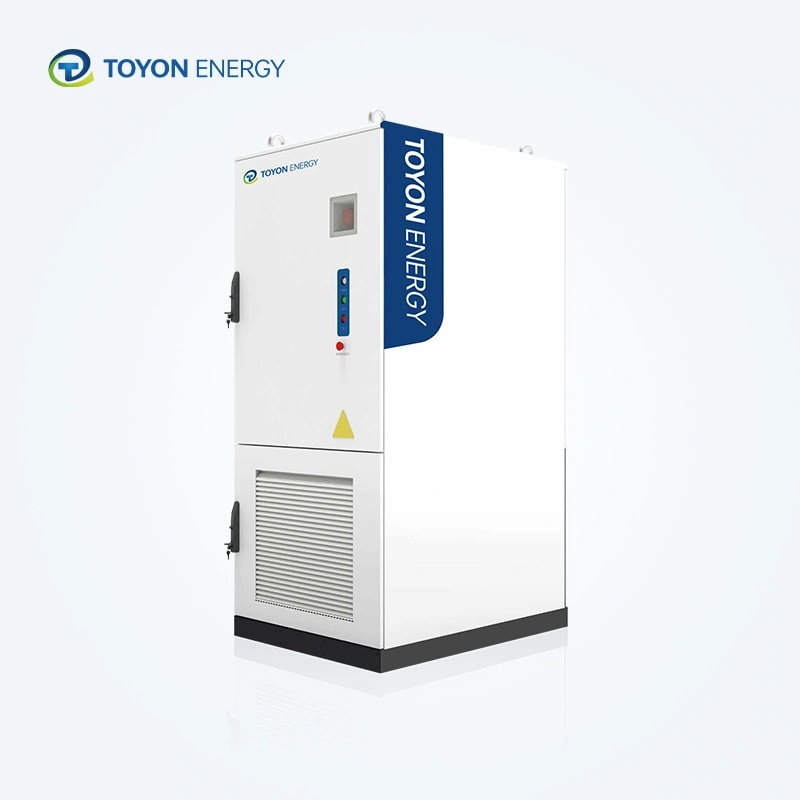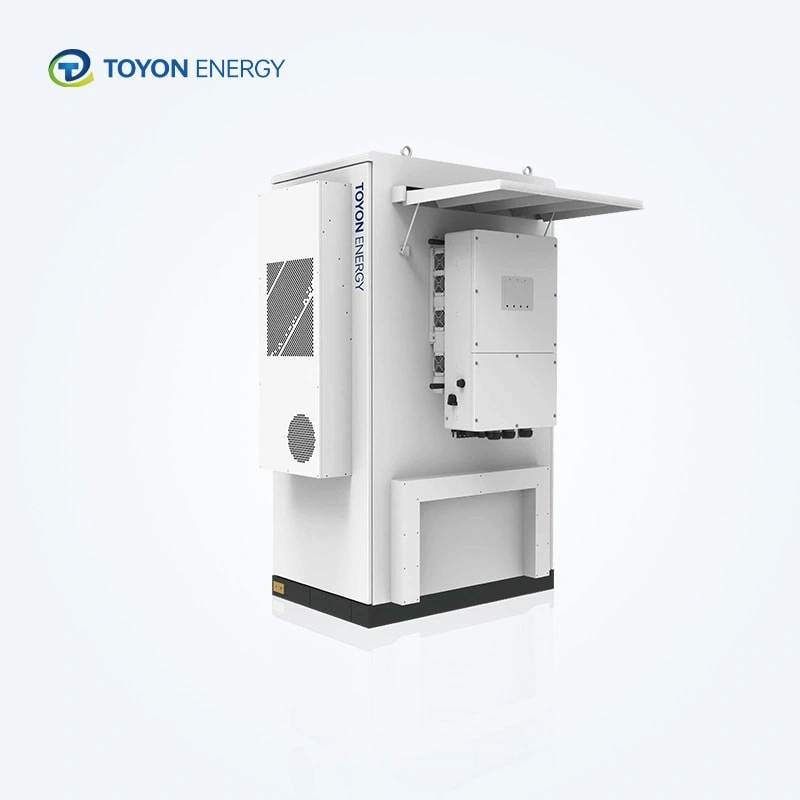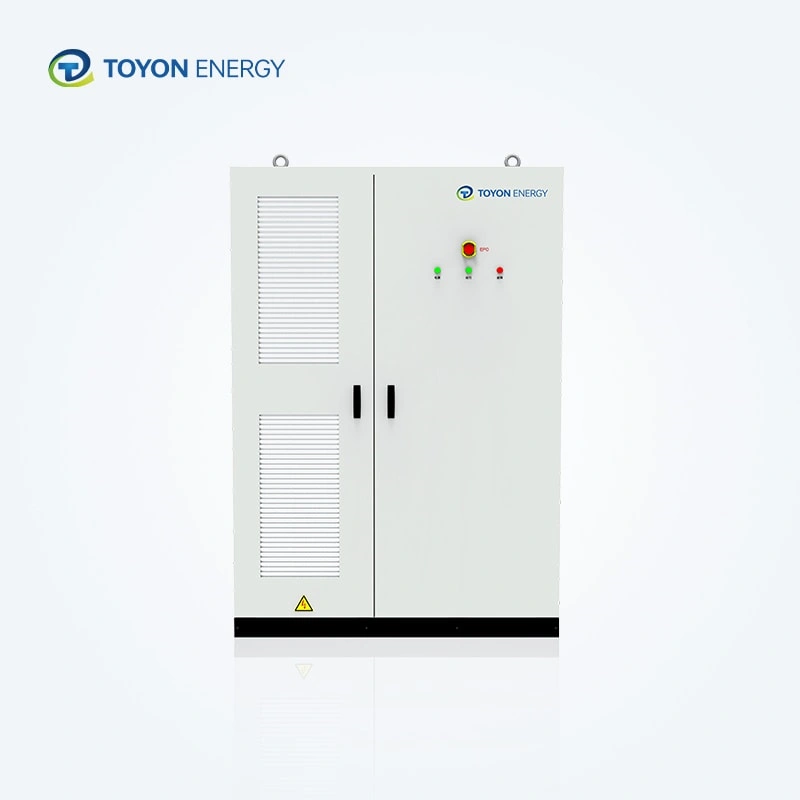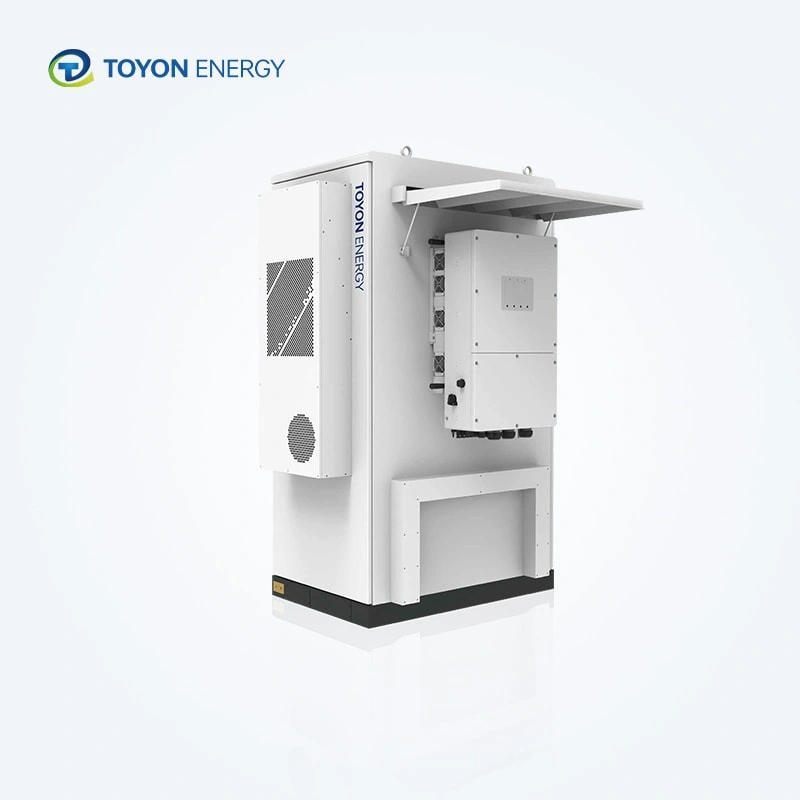
Type de cellule de batterie : |
LFP / 314 Ah |
Cycle de vie de la batterie : |
≥ 8 000 cycles |
Cooling: |
Refroidissement par air |
Dimensions (L*P*H) : |
800*1,200*2,100 mm |
Poids : |
1200 kg |
Commercial 215-253KWh 100-125KW Hybrid ESS Cabinet All-in-One System for Sale
The Air-cooled Hybrid Cabinet series is a professional PV-plus ESS solution, designed on ESS integration and digital monitoring technologies. The cabinet integrates components such as lithium battery, HVAC, fire suppression system (FSS), and EMS. With compact structure, it enables easy installation and flexible capacity expansion. Paired with hybrid inverter, the ESS supports multiple work modes and various operation strategies.
Remarque : Veuillez lire le manuel de sécurité et d'installation avant d'utiliser le produit. Nous nous réservons le droit d'interprétation finale.
Les spécifications de cette fiche technique sont sujettes à modification sans préavis.
Fonctionnalités
Économique et efficace
- RTE jusqu'à 90%, DOD jusqu'à 100%.
Sûr et fiable
- IP55, conception de ventilation optimisée, différence de température inférieure à 6 °C.
Compact et pratique
- Empreinte de 0,96 m², facile à transporter et à installer.
Extensible et modulaire
- Une conception modulaire simple prend en charge la connexion en parallèle pour une extension pratique du système.
Polyvalent
- Prend en charge plusieurs marques d'onduleurs hybrides, avec une plus grande sélectivité.
PV raccordable
- Prise en charge de la connexion photovoltaïque, avec une plus grande intégration.
Auto-développé
- Intégration du système de cellules de batterie LFP 314 Ah, avantage majeur en termes de coûts, fusion 3S.
Exploitation et maintenance simplifiées
- Prend en en charge plusieurs modes d'exploitation et de maintenance, y compris sur site et dans le cloud.
Description du produit
| Armoire à batteries | ||
| Type de cellule | LFP / 314Ah | LFP / 314Ah |
| Configuration du pack | 17.92 kWh / 1P20S | 18.086 kWh / 1P18S |
| Configuration du système | 215.04 kWh / 1P240S | 253.209 kWh / 1P252S |
| Tension continue nominale | 768V | 806.4V |
| Plage de tension continue | 672V~864V | 705.6V~907.2V |
| Taux de charge/décharge max. | 0,5 P | 0,5 P |
| Profondeur de décharge max. | 100% (25 ± 2 °C) | 100% (25 ± 2 °C) |
| Durée de vie en cycles | 8 000 cycles | 8 000 cycles |
| Entrée PV | ||
| Max. Input Power | 100 kW | 125kW |
| Plage de tension PV | 180 ~ 1000V | 180 ~ 1000V |
| MPPT | 10 | 10 |
| Max. Input Current | 42A*10 | 42A*10 |
| Côté CA | ||
| Parameter | Value | |
| Puissance de sortie nominale | 40 kW | |
| Tension alternative assignée | 400V | |
| Plage de tension alternative | ±15% | |
| Type de grille | 3PH+N+PE | |
| Fréquence nominale | 50Hz/60Hz | |
| Facteur de puissance | 0.99 / -0.8 ~ +0.8 | |
| THDi | ≤3% | |
| Ratio d'endettement | <0.5% Ipn | |
| Général | ||
| Parameter | Value | |
| Rendement aller-retour maximal | 90% | |
| Communication | Modbus TCP/IP | |
| Système d'extinction d'incendie | Aérosol | |
| Indice de protection | IP55 | |
| Refroidissement | Refroidissement par air | |
| Température de fonctionnement | -25°C~55°C (Déclassement après 45°C) | |
| Indice anticorrosion | C4 (C5 facultatif) | |
| Humidité | 0 à 951 TP3T %HR (sans condensation) | |
| Altitude | 3000m (Déclassement au-dessus de 2000m) | |
| Dimensions (L x P x H) | 8001,2002,100 mm | |
| Poids | 1200 kg | |
| Sécurité/CEM | UN38.3, IEC62619, IEC63056, IEC62477-1, IEC61000-6-2/4 | |
| Grid Code | EN50549-1/-10, EN50549-2/-10, G99, VDE4105, NRS097, C10/11 | |
Applications
The Commercial 215-253kWh 100-125kW Hybrid ESS Cabinet is designed for a wide range of commercial and industrial energy storage applications, helping businesses reduce electricity costs, improve energy efficiency, and ensure reliable power supply.
Commercial Buildings
Ideal for office buildings, shopping malls, supermarkets, hotels, and commercial complexes. The system stores electricity during off-peak hours and supplies power during peak demand, reducing energy costs while providing reliable backup power.
Manufacturing Plants
Manufacturing facilities can use the commercial battery energy storage system to perform peak shaving, load shifting, and demand charge management. It helps maintain continuous production by minimizing the impact of grid instability and power outages.
Solar PV + Battery Storage
Integrated with rooftop or ground-mounted solar systems, the Hybrid ESS Cabinet stores excess solar energy for use during the evening or periods of low solar generation, maximizing renewable energy utilization and improving project ROI.
Bornes de recharge pour véhicules électriques
The system supports high-power EV charging infrastructure by balancing electricity demand, reducing grid pressure, and lowering operating costs through intelligent energy management.
Industrial Parks & Microgrids
Suitable for industrial parks and microgrid projects, the ESS cabinet enables efficient energy distribution, renewable energy integration, and reliable power supply for multiple facilities.
Critical Infrastructure
Widely used in hospitals, data centers, telecommunications, and other mission-critical facilities, the system provides uninterrupted backup power and enhances power quality to ensure continuous operation.
Why Choose Toyon Energy?
Toyon Energy provides advanced commercial battery energy storage solutions for global customers. Our integrated Hybrid ESS Cabinet combines high efficiency, intelligent energy management, and reliable safety protection, making it an ideal solution for commercial and industrial energy storage projects worldwide.
Whether you are looking for a commercial battery storage system, hybrid ESS cabinet, industrial energy storage solution, or solar battery storage system, Toyon Energy offers customized solutions to meet diverse project requirements.
FAQ
1. Qu'est-ce qu'une armoire ESS hybride refroidie par air de 215 à 253 kWh et de 100 à 125 kW ?
Il s'agit d'un système de stockage d'énergie commercial intégré combinant des modules de batterie LFP, un onduleur hybride (PCS) de 100 à 125 kW, un système de contrôle EMS et un système de refroidissement par air. Il est conçu pour la gestion de l'énergie connectée au réseau et hors réseau dans les applications commerciales et industrielles (C&I).
2. À quelles applications cette armoire ESS est-elle adaptée ?
Il est couramment utilisé pour l'écrêtement des pointes industrielles, la réduction des coûts de l'électricité commerciale, le stockage photovoltaïque solaire, le support de recharge pour véhicules électriques, l'alimentation de secours et les systèmes de micro-réseaux. Il est idéal pour les usines, les centres commerciaux, les immeubles de bureaux et les installations à forte consommation d'énergie.
3. Pourquoi choisir une armoire ESS refroidie par air plutôt que par refroidissement liquide ?
Air-cooled systems have a simpler structure, lower upfront cost, and easier maintenance. They are suitable for most standard commercial environments, especially where extreme temperature control is not required.
4. What is the difference between 215kWh and 253kWh models?
Both models use the same 100–125kW power system. The difference is energy capacity. The 253kWh version provides higher storage capacity, resulting in longer backup duration and more energy flexibility.
5. Can this ESS cabinet integrate with solar PV systems?
Yes. It supports solar PV input, grid charging/discharging, and hybrid energy management. It can maximize self-consumption and improve renewable energy utilization efficiency.
6. Is the system scalable for larger projects?
Yes. Multiple cabinets can be connected in parallel to form multi-MWh energy storage systems. This allows flexible expansion based on project size and energy demand.
7. Is this ESS cabinet suitable for backup power applications?
Yes. It provides reliable backup power during grid outages and ensures continuous operation for critical loads such as production lines, data systems, and commercial facilities.
8. How is the system monitored and controlled?
It is equipped with a smart Energy Management System (EMS) that enables real-time monitoring, remote control, fault alarms, and energy optimization strategies such as peak shaving and TOU management.