


المحتويات
As electricity costs continue to rise and renewable energy adoption accelerates, more businesses are investing in commercial and industrial battery storage systems to improve energy efficiency, reduce operating costs, and achieve greater energy independence.
A Commercial and Industrial Battery Energy Storage System (C&I BESS) allows factories, commercial buildings, warehouses, data centers, and other facilities to store electricity and use it when needed. By combining battery storage with renewable energy sources such as solar PV, businesses can optimize energy consumption, reduce peak demand charges, and ensure reliable power supply.
This complete guide explains how commercial battery storage systems work, their key benefits, applications, costs, and how to choose the right solution in 2026.
ما هو نظام تخزين البطاريات التجاري والصناعي؟
A commercial and industrial battery storage system is an energy storage solution designed for medium and large-scale electricity users. Unlike residential battery systems, C&I BESS solutions typically range from hundreds of kWh to multiple MWh and are designed to support higher power demands.
A complete industrial battery energy storage system usually includes:
1. نظام البطارية
The battery stores electrical energy for later use. Most modern C&I energy storage systems use lithium iron phosphate (LiFePO4) batteries due to their high safety, long cycle life, and excellent thermal stability.
2. نظام تحويل الطاقة (PCS)
The PCS converts electricity between AC and DC, allowing the battery to charge and discharge efficiently.
3. نظام إدارة الطاقة (EMS)
The EMS intelligently manages energy flows by monitoring electricity consumption, solar generation, battery status, and grid conditions.
4. نظام إدارة البطارية (BMS)
The BMS protects battery cells by controlling temperature, voltage, current, and safety performance.
كيف يعمل نظام تخزين طاقة البطاريات الصناعية؟
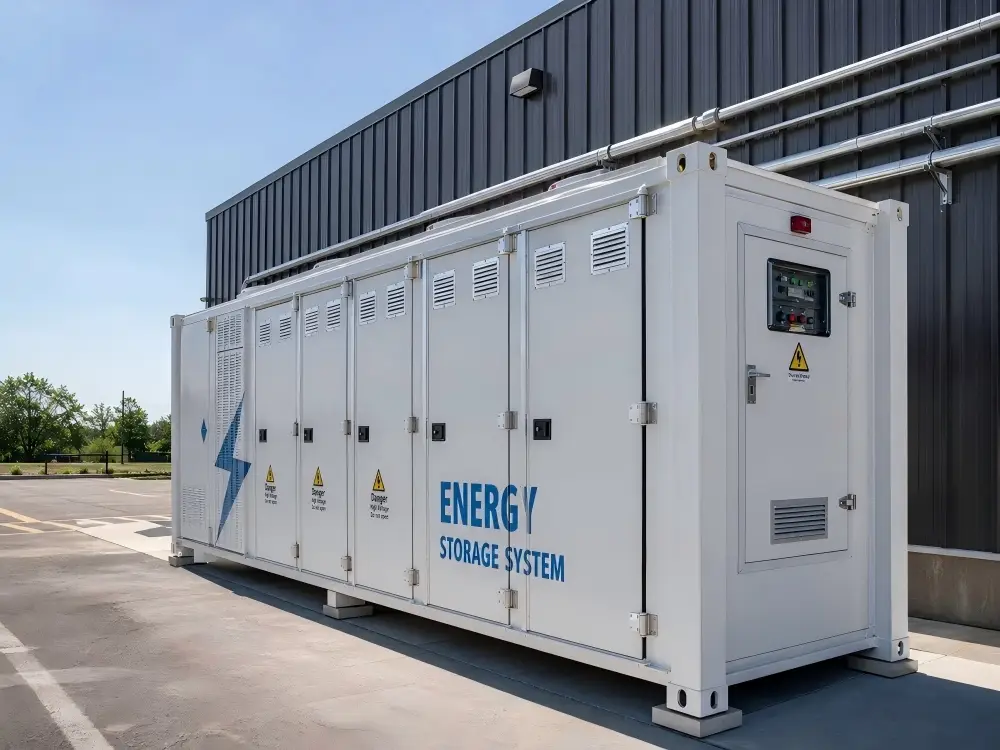
A typical C&I battery storage system works through three main processes:
شحن الطاقة
During periods of low electricity prices or high solar generation, the system stores excess electricity in batteries.
For example:
- Solar panels generate electricity during the daytime
- Excess solar energy charges the battery
- Stored energy is saved for later use
2. تخزين الطاقة
The battery system keeps stored energy available for future demand. Advanced EMS platforms continuously monitor energy usage and optimize battery performance.
3. تفريغ الطاقة
During peak electricity periods, power outages, or high-demand situations, the battery supplies stored electricity to reduce grid dependence.
This process helps businesses achieve:
- Peak shaving
- Demand charge reduction
- Backup power protection
- Renewable energy optimization
الفوائد الرئيسية لنظام تخزين البطاريات التجاري
1. تقليل تكاليف الكهرباء
One of the biggest advantages of commercial battery storage is reducing energy expenses.
Businesses can charge batteries when electricity prices are low and discharge energy during expensive peak periods. This strategy, known as peak shaving and time-of-use optimization, helps reduce electricity bills significantly.
تحسين موثوقية الطاقة
Power interruptions can cause major losses for manufacturing facilities, hospitals, data centers, and industrial plants.
A battery energy storage system provides backup power to maintain critical operations and improve energy security.
3. تعظيم استخدام الطاقة الشمسية
Many businesses install solar PV systems to reduce carbon emissions. However, solar generation does not always match electricity demand.
By integrating solar panels with battery storage, companies can:
- Store excess daytime solar energy
- Use renewable power at night
- Increase solar self-consumption
- Reduce grid dependency
4. دعم أهداف الاستدامة
Commercial battery storage helps companies reduce carbon emissions and meet renewable energy targets.
For businesses facing increasing environmental regulations, C&I BESS provides an effective pathway toward cleaner energy management.
الapplications الشائعة لأنظمة تخزين طاقة البطاريات التجارية والصناعية (C&I)
Commercial and industrial battery storage solutions are widely used in:
منشآت تصنيع
Factories often experience high electricity demand and expensive peak charges. Battery storage helps optimize energy consumption and improve operational efficiency.
المباني التجارية
Office buildings, shopping centers, and hotels can use battery storage to lower electricity costs and improve backup power capability.
مراكز البيانات
Data centers require highly reliable power. Battery systems provide energy security and support uninterrupted operations.
المواقع الصناعية النائية
Mining sites, agricultural facilities, and remote areas can combine solar, battery storage, and microgrid technology to achieve energy independence.
كيفية اختيار نظام تخزين البطاريات التجاري المناسب؟
Before selecting a C&I BESS solution, businesses should consider:
١. سعة الطاقة (كيلوواط ساعة / ميغاواط ساعة)
Determine how much energy needs to be stored based on daily consumption and backup requirements.
2. التصنيف بالمقدار (كيلوواط)
The power rating determines how much electricity the battery can deliver at one time.
3. تكنولوجيا البطاريات
LiFePO4 batteries are currently the preferred choice for commercial applications because of their:
- Long lifespan
- High safety performance
- Stable operation
قابلية توسع النظام
A good battery storage solution should allow future expansion as energy demands increase.
٥. خبرة المورد
Choosing an experienced manufacturer with global project experience ensures better system reliability, technical support, and after-sales service.
الاتجاهات المستقبلية لأنظمة تخزين البطاريات التجارية في عام 2026
The C&I energy storage market is developing rapidly. Key trends include:
- Greater adoption of solar + storage systems
- Intelligent energy management with AI technology
- Larger-scale modular battery systems
- Microgrid development for energy independence
- Increased demand for sustainable industrial solutions
As businesses continue searching for reliable and cost-effective energy solutions, commercial battery storage will become an essential part of modern energy infrastructure.
خاتمة
A commercial and industrial battery storage system provides businesses with a smarter way to manage electricity, reduce energy costs, improve reliability, and integrate renewable energy.
From factories and commercial buildings to remote industrial applications, C&I BESS solutions are helping organizations transition toward a more efficient and sustainable energy future.
By selecting the right battery technology, system capacity, and experienced energy partner, businesses can unlock the full value of energy storage in 2026 and beyond.
الأسئلة الشائعة
١. ما هو نظام تخزين البطارية التجاري والصناعي؟
A commercial and industrial battery storage system (C&I BESS) is an energy storage solution designed for factories, warehouses, commercial buildings, and industrial facilities. It stores electricity from renewable energy sources or the grid and releases power when needed to reduce energy costs and improve power reliability.
2. How does a commercial battery storage system work?
A C&I battery storage system charges batteries during periods of low electricity prices or excess renewable energy generation. The stored energy can then be discharged during peak demand periods, power outages, or when electricity costs are higher.
3. What are the main benefits of installing a C&I battery energy storage system?
The main benefits include:
Reducing electricity costs through peak shaving
Improving energy efficiency
Providing backup power during outages
Increasing renewable energy utilization
Supporting energy management and grid stability
Reducing carbon emissions
4. What size battery storage system does my business need?
The required battery capacity depends on:
Facility electricity consumption
ملف ذروة الطلب
Load requirements
Solar PV generation capacity
متطلبات طاقة الاحتياط
Energy management goals
A professional energy assessment is recommended before selecting the appropriate system size.
5. What is the typical capacity range of commercial and industrial BESS?
Commercial and industrial battery storage systems typically range from hundreds of kWh to several MWh, depending on the application. Common solutions include:
100kWh–500kWh systems for small commercial buildings
500kWh–2MWh systems for factories and industrial facilities
Multi-MWh systems for large-scale industrial projects
6. What is peak shaving in battery energy storage?
Peak shaving is an energy management strategy that uses batteries to reduce electricity demand during peak periods. The battery supplies additional power when facility demand reaches high levels, helping businesses avoid expensive demand charges.
7. Can battery storage provide backup power during grid outages?
Yes. When combined with suitable power conversion systems and energy management controls, C&I battery storage systems can provide backup power for critical loads, helping maintain business operations during grid interruptions.