


Table of Contents
When choosing solar panels, wattage is often one of the first specifications buyers look at. A 450W, 550W, 600W or 750W module may seem like a simple choice, but the right solar panel depends on much more than power output. Module size, weight, efficiency, manufacturing quality, installation conditions and long-term performance all need to be considered.
For residential, commercial and utility projects, understanding these factors can help buyers select PV modules that are better suited to their specific applications.
Is a Higher-Wattage Solar Panel Always Better?
Higher-wattage solar panels can produce more power from each module, which may reduce the total number of panels required for a project. This can be particularly useful for commercial and utility-scale installations where installation efficiency is important.
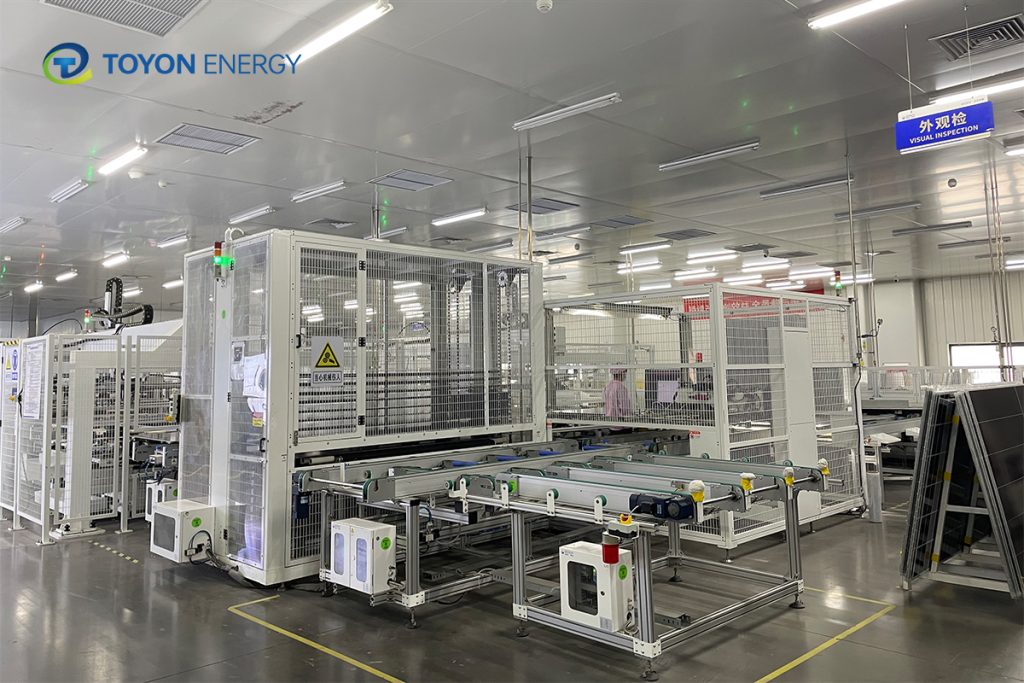
However, higher power usually comes with larger module dimensions and greater weight. This can affect transportation, handling and installation, especially on rooftops or projects with limited working space.
Instead of simply choosing the highest wattage available, buyers should consider power output, module dimensions, weight and installation conditions together.
Why Does Solar Panel Manufacturing Quality Matter?
Solar panels are designed to operate outdoors for many years, making manufacturing quality an important consideration.
A reliable production process should include multiple quality-control stages rather than relying only on a final visual inspection. Important processes can include cell stringing, layup, lamination, framing and electrical testing.
For example, EL testing can help identify hidden cell defects that may not be visible to the naked eye, while IV testing helps verify the electrical performance of the finished module.
For distributors, EPC companies and project developers purchasing PV modules in larger quantities, consistent manufacturing quality is particularly important because the performance of an entire batch can affect the overall project.
What Should Buyers Know About Solar Panel Testing?
Testing is an important part of PV module quality control.
A typical manufacturing process may include:
Stringing → Layup → Lamination → EL Test → Framing → J-box Installation → IV Test
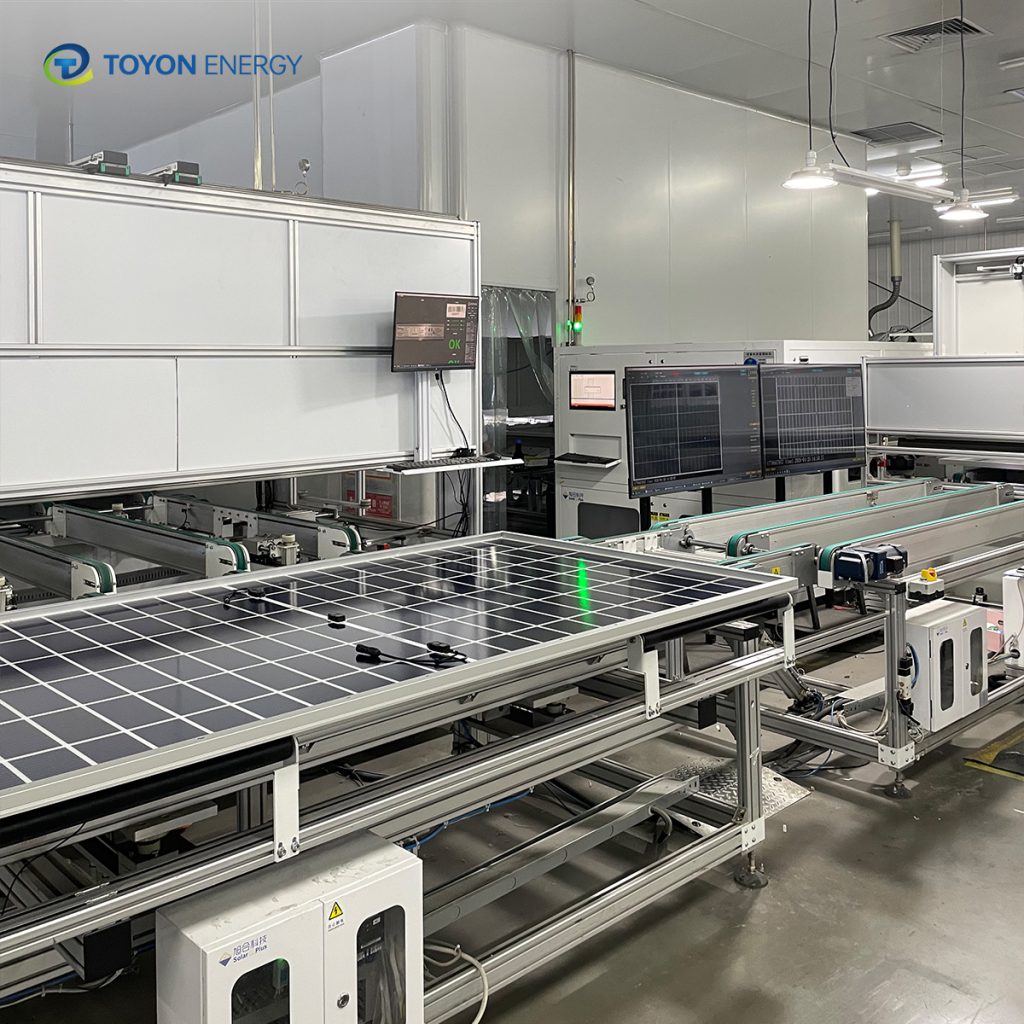
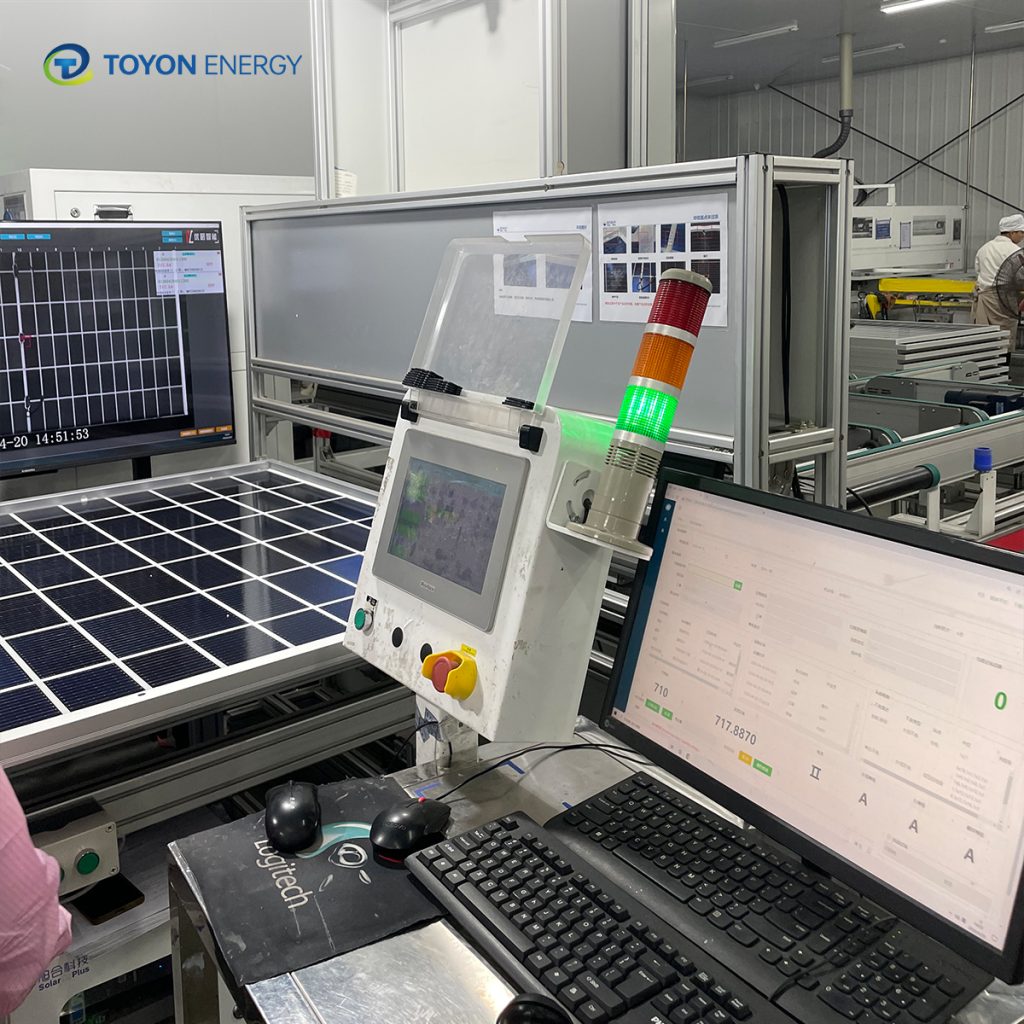
Each stage serves a different purpose. Lamination helps protect the internal components, while EL and IV testing provide additional checks on module condition and electrical performance.
When comparing different solar panel manufacturers, buyers should therefore consider not only the specifications on the datasheet but also how the modules are manufactured and tested.
What About Long-Term Performance?
Initial power output is only one part of a solar panel's value. Because PV modules are expected to operate for many years, buyers should also look at efficiency, degradation, warranty conditions and expected service life.
A module with stable long-term performance can help provide more predictable energy generation over the life of a solar project.
This is particularly relevant for commercial and utility projects, where long-term energy production can have a significant impact on overall project returns.
How Should Buyers Choose Between Different Solar Panel Power Ranges?
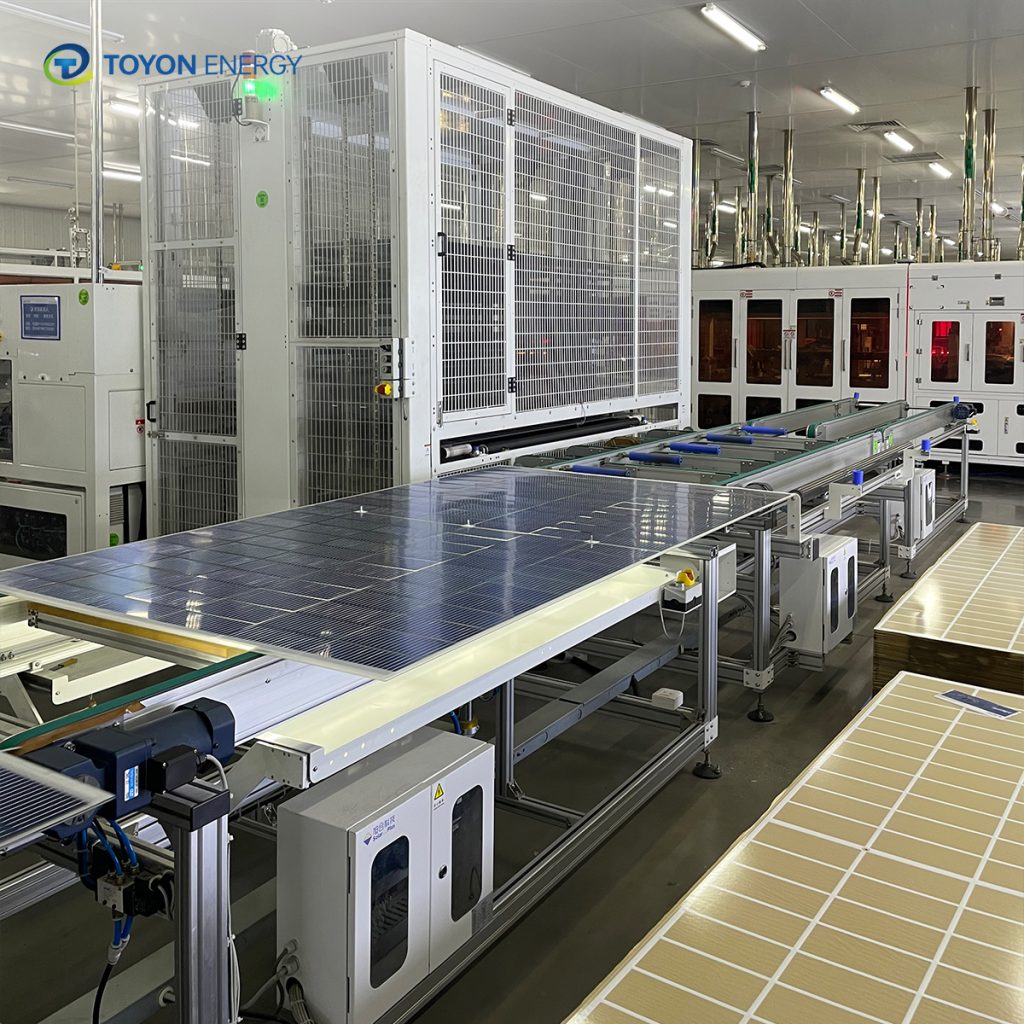
There is no single wattage that is suitable for every solar project. The right module depends on the required system capacity, available installation space, module dimensions and overall project design.
Toyon Energy offers different power ranges to meet various project requirements:
- 450W–470W — suitable for projects where module size and installation flexibility are important.
- 455W–475W — a flexible option for different residential and commercial applications.
- 490W–520W — provides a higher power output for projects looking to improve energy production per module.
- 580W–600W — suitable for larger commercial and utility applications.
- 610W–630W — designed for projects requiring higher output per module.
- 630W–650W — suitable for larger-scale installations where higher module power is preferred.
- 710W–730W — high-power modules designed mainly for large commercial and utility-scale projects.
When selecting a solar panel, buyers should consider more than wattage. Module dimensions, weight, efficiency, inverter compatibility, transportation, installation conditions and overall system design should all be evaluated together.
Choosing a Reliable Solar Panel Supplier
For buyers sourcing PV modules, the supplier is just as important as the product specifications. A reliable solar panel supplier should be able to provide consistent product quality, clear technical documentation, stable production capacity and suitable delivery arrangements.
Toyon Energy offers 450W–750W PV modules for residential, commercial and utility applications. Each module goes through a controlled production and testing process to support consistent product quality.
Whether you are an installer, distributor, EPC company or project developer, comparing wattage together with manufacturing quality, long-term performance and project requirements can help you make a more informed decision.
FAQs
1. Are higher-wattage solar panels always better?
Not necessarily. Higher-wattage panels can produce more power per module and may reduce the total number of panels required. However, they can also be larger and heavier. Buyers should consider power output together with available space, transportation, handling and installation conditions.
2. What is the difference between 450W and 700W+ solar panels?
The main difference is the power output per module, but physical dimensions can also be significantly different. A higher-wattage panel may be more suitable for large commercial or utility projects, while a smaller module can offer more flexibility where installation space or handling is limited.
3. Should I choose solar panels based only on efficiency?
No. Efficiency is important, especially when installation space is limited, but it should be considered together with power output, dimensions, temperature coefficient, degradation, warranty and overall system design. Recent solar discussions also emphasize that comparing specifications alone may not tell the whole story.
4. Why does the temperature coefficient matter?
Solar panels generally produce less power as their operating temperature increases. The temperature coefficient indicates how module performance changes with temperature. For projects in hot climates, this specification can be particularly useful when comparing different PV modules.
5. What should I check besides the solar panel datasheet?
Buyers should also look at the manufacturing process, quality-control procedures, testing, product warranty and supplier capabilities. For bulk orders, consistent quality across the entire batch can be especially important.
6. Why is EL testing important for solar panels?
EL testing can help identify certain hidden cell defects and abnormalities that may not be visible during a normal visual inspection. It is one of the quality-control steps buyers can ask manufacturers about when evaluating PV modules.
7. Do solar panels really last 25 years?
A 25-year performance warranty is common in the modern PV market, but warranty length and actual operating life are not exactly the same thing. Buyers should review both the product warranty and performance warranty, as well as the manufacturer's track record and warranty terms.
8. What should I consider when buying solar panels in bulk?
For bulk procurement, focus on consistent quality, suitable power range, technical specifications, testing, packaging, delivery capacity and after-sales support. It is also important to make sure the selected module is compatible with the project's mounting system, inverter and electrical design.