


Table des matières
Warehouses are often well suited for commercial solar because they typically have large roof areas and significant daytime electricity demand. However, designing a solar system for a warehouse involves much more than calculating how many panels can fit on the roof. Roof condition, electricity consumption, system capacity, grid connection, shading, electrical infrastructure and future energy needs all affect the final system design.
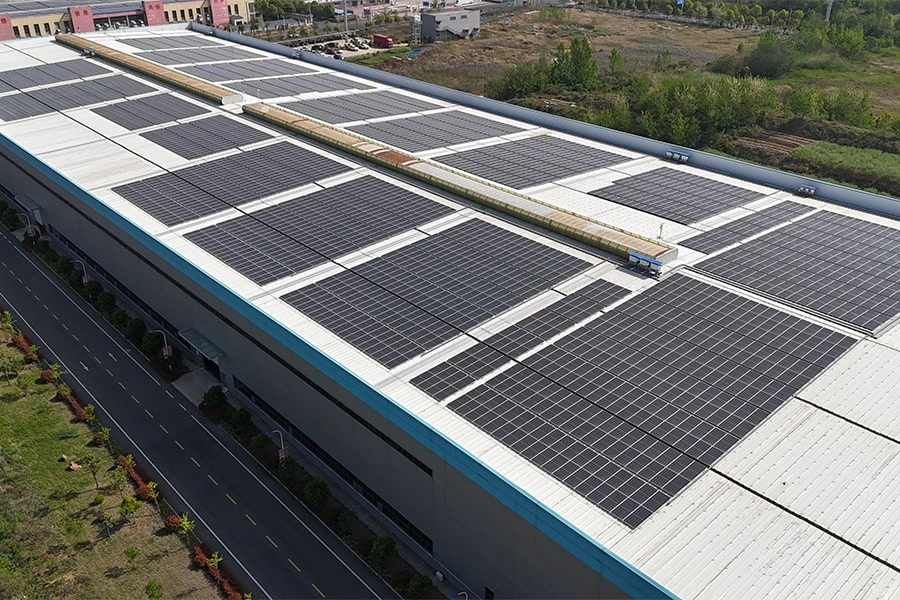
For warehouse owners, EPC companies, installers and project developers, understanding these factors before installation can help create a more reliable and cost-effective C&I solar project.
1. Start With the Warehouse’s Energy Consumption
The first step is to understand how the warehouse uses electricity.
Lighting, ventilation, air conditioning, refrigeration, conveyor systems, machinery and other equipment can create substantial daytime loads. If these loads occur during solar production hours, a large portion of the PV generation can potentially be consumed directly by the facility.
Reviewing historical electricity bills and, where available, hourly or daily load data can help determine the appropriate PV capacity. Instead of simply maximizing the number of panels, the system should be sized according to actual energy demand and the project's self-consumption requirements.
This approach can also help businesses avoid installing more capacity than their electrical infrastructure or operating profile can effectively use.
2. Evaluate the Roof Before Installing Solar Panels
A large warehouse roof does not necessarily mean that the entire surface is available for PV installation.
A proper site assessment should consider roof orientation, roof pitch, shading, structural capacity and the remaining service life of the roof. HVAC equipment, skylights, vents and other rooftop structures can also reduce the usable installation area.
Maintenance pathways, drainage, fire-safety requirements and access for installation teams should be included in the layout as well.
For older warehouses, it may be necessary to evaluate whether roof reinforcement or renovation should be completed before installing the PV system. Addressing these issues at the planning stage can prevent additional costs and delays later.
3. Optimize the PV Layout and Inverter Configuration
Once the usable roof area and electricity demand are understood, the next step is to determine the appropriate panel and inverter configuration.
A warehouse solar PV system should be designed around the actual characteristics of the roof rather than simply filling every available space with modules. Different roof orientations and shading conditions may require separate string configurations and careful MPPT planning.

Inverter selection should also consider the PV array capacity, operating voltage, string configuration and the warehouse's existing electrical system. For larger facilities, designers may also consider whether the system should allow for future expansion.
A well-planned configuration can make better use of available roof space while maintaining stable system operation.
4. Check the Existing Electrical Infrastructure
The warehouse's electrical infrastructure is another important part of project planning.
Before installation, the project team should review the main distribution equipment, transformer capacity, existing electrical loads and grid connection conditions. A warehouse may have sufficient roof space for a large PV array but still require electrical upgrades before the system can be connected.
Local grid requirements and export limitations should also be considered. Depending on the project location, the system may be designed primarily for self-consumption, with excess generation exported to the grid where permitted.
Understanding these requirements early can help EPC companies develop a more practical system design and avoid unexpected modifications during installation.
5. Plan for Changing Energy Needs
A warehouse’s energy requirements can change over time as operations expand, equipment is added or working hours change. This makes flexibility an important consideration when planning a C&I PV project.
For facilities with substantial daytime electricity consumption, solar power can help offset part of the grid electricity used during operating hours. If energy demand later extends into the evening or peak periods, battery storage can be considered as an additional solution for storing excess solar generation and improving energy utilization.
Planning for these possibilities at the beginning can make future upgrades easier. For example, the electrical infrastructure, inverter configuration and available installation space can be evaluated with potential BESS integration in mind.
For warehouse owners and project developers, commercial rooftop solar system solutions can provide a flexible foundation that can adapt to changing energy requirements. Depending on the project's needs, the system can be developed around solar generation first and later expanded with battery storage or other energy management technologies.
6. Choose the Right Solar Partner
For a commercial warehouse project, product quality is only one part of the purchasing decision. Buyers should also evaluate module specifications, inverter compatibility, certifications, warranty terms, delivery capability and technical support.
EPC companies and installers may also need customized system configurations depending on the project location, roof structure and electrical requirements.
Working with an experienced commercial solar system manufacturer can simplify equipment sourcing and technical coordination while providing greater flexibility for different C&I applications.
Conclusion
Designing solar for a warehouse requires more than calculating available roof space. Electricity consumption, roof condition, shading, structural capacity, PV layout, inverter selection, grid connection and future energy storage should all be considered as part of one complete solution.
A properly designed C&I PV system can help warehouses make better use of available roof space and increase on-site renewable energy consumption. For businesses planning a new commercial solar project, careful assessment at the beginning can provide a stronger foundation for reliable long-term operation.
FAQ
1. How do I determine the right C&I PV system size for a warehouse?
The appropriate system size depends on the warehouse’s electricity consumption, operating hours, available roof area, local solar conditions and grid connection requirements. Reviewing historical electricity bills and load profiles can help determine how much solar generation the facility can effectively use.
2. How much roof space is needed for a warehouse solar system?
The required roof area depends on the number, power rating and efficiency of the solar panels, as well as the roof layout. Space may also be needed for maintenance pathways, safety clearances, HVAC equipment and other rooftop structures.
3. Can a warehouse use solar power directly during the day?
Yes. When the PV system is generating electricity, the warehouse can use the solar power directly for its operating loads. Daytime loads such as lighting, air conditioning, refrigeration and equipment can increase on-site solar consumption.
4. Can a warehouse solar system generate more electricity than the building needs?
Yes. If PV generation exceeds the warehouse’s real-time electricity demand, the excess electricity may be exported to the grid or stored in a battery, depending on the local grid regulations and the system configuration.
5. Does a warehouse solar system need battery storage?
Not necessarily. A warehouse with substantial daytime electricity consumption may use a C&I PV system without batteries. However, BESS can be considered when the facility needs additional energy during non-solar hours, wants to shift solar generation or needs more advanced energy management.
6. Can battery storage be added to a warehouse PV system later?
In many projects, yes, provided the original electrical infrastructure and system design allow for future integration. Considering potential BESS requirements during the initial design can make future expansion easier.
7. What should I check before installing solar panels on a warehouse roof?
The main considerations include roof condition, structural capacity, roof orientation, shading, usable installation area, drainage, maintenance access and existing rooftop equipment. The building’s electrical infrastructure and grid connection should also be assessed before finalizing the system design.