


Table des matières
Choosing the right solar panels for a commercial project is about more than finding the lowest price or the highest wattage. For factories, warehouses and commercial buildings, buyers also need to consider efficiency, long-term performance, installation conditions, system compatibility and supply reliability.
With N-type solar panels becoming increasingly common, commercial buyers now have more options when selecting modules. So, what should you look at before placing an order?
1. Start with Project Requirements, Not Panel Wattage
Higher-power modules can be useful when installation space is limited. For example, 500W, 550W and 600W+ panels can help achieve the required system capacity with fewer modules. This may reduce the number of mounting points, cables and installation work.
However, higher wattage does not automatically mean a better choice. Module size, weight, electrical parameters and available roof space should all be considered.
For a commercial rooftop, the goal is to make the best use of the available area. For a ground-mounted project, land utilization, mounting structure and system configuration may be more important. The right panneaux solaires commerciaux should therefore match the overall project design.
2. Consider Efficiency and Long-Term Performance
Efficiency is particularly important for commercial buildings with limited roof space.
High efficiency solar panels can generate more electricity from the same installation area, which can help maximize the available rooftop. Higher efficiency can also reduce the number of modules needed to reach a specific system capacity.
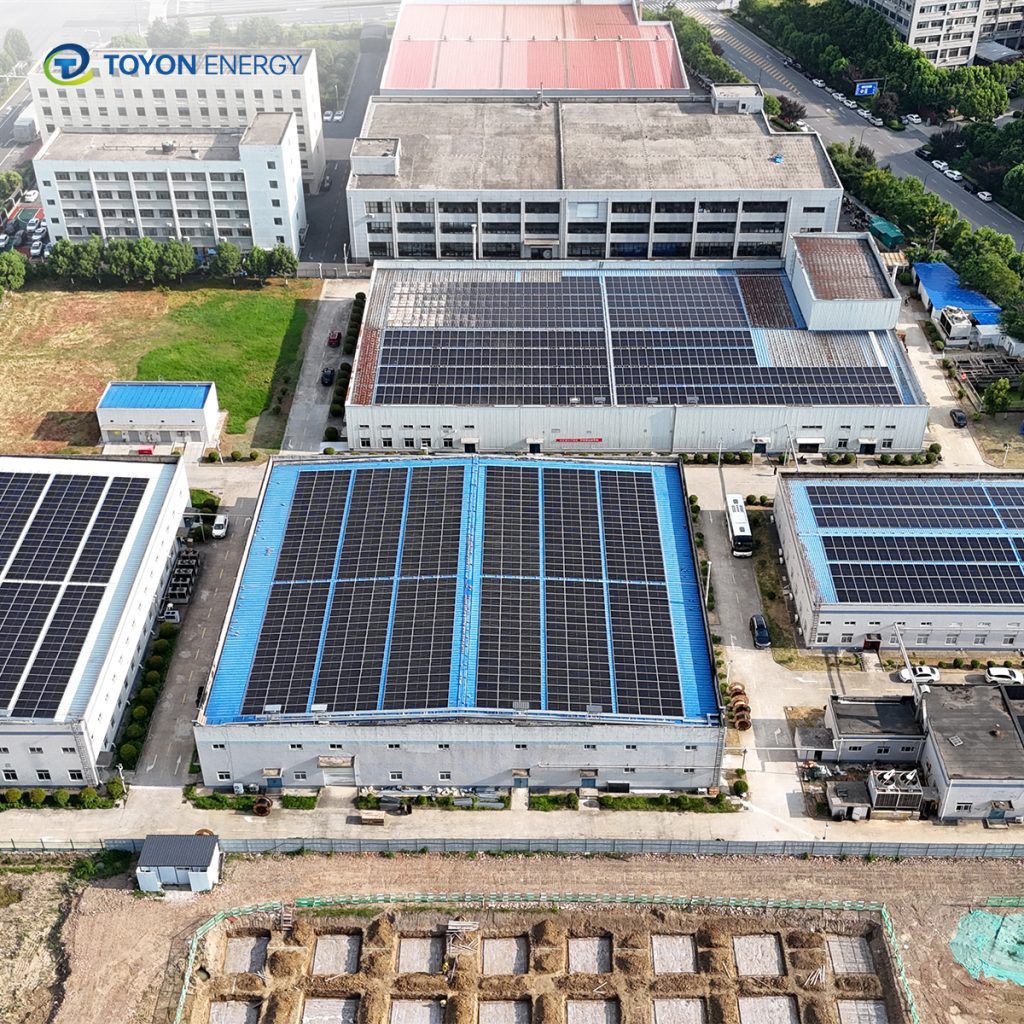
This is one reason N-type solar panels are receiving more attention in modern PV projects. N-type technologies such as TOPCon can support high-efficiency module designs while offering good long-term performance.
When comparing modules, however, buyers should look beyond efficiency alone. Temperature coefficient, degradation rate, bifaciality and warranty terms can all affect the long-term value of a solar installation.
3. Think About Real-World Conditions
Solar panels can perform differently depending on where they are installed.
For commercial projects in hot climates, operating temperature can have a noticeable effect on power output. Buyers should check the module's temperature coefficient and consider expected outdoor conditions.
Projects in regions with frequent cloudy weather may also need to consider low-light performance. Meanwhile, dust, humidity, strong wind, snow and other environmental factors can influence module selection.
For example, a factory rooftop in a hot and dusty region may have very different requirements from a warehouse in a cooler climate.
Therefore, when comparing solar PV modules, it is better to consider expected real-world operating conditions rather than focusing only on laboratory efficiency.
4. Check Compatibility with the Complete Solar System
A high-power module still needs to work properly with the inverter and other system components.
Before ordering, buyers should check key specifications such as:
- Voc and Vmp
- Isc and Imp
- Maximum system voltage
- Plage de température de fonctionnement
- Inverter input current
- MPPT voltage range
- Module dimensions and weight
These specifications become especially important when designing panel strings. The number of modules connected in series needs to remain within the inverter's voltage range under different operating conditions.
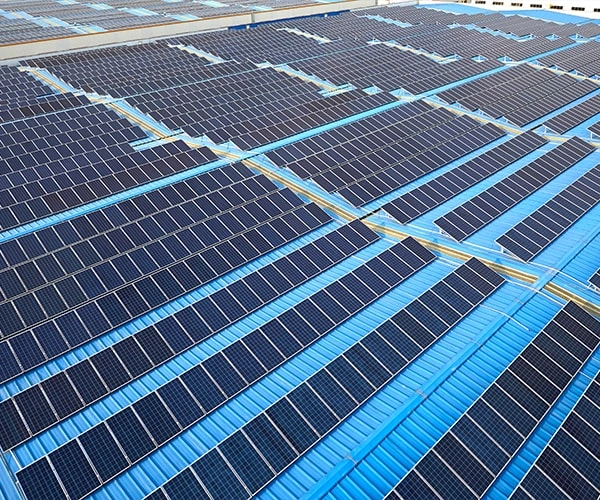
Proper compatibility can help avoid design changes, installation problems and unnecessary equipment limitations later in the project.
5. Consider Module Size, Weight and Installation
Higher-power modules are often physically larger, so installation requirements should not be overlooked.
Commercial rooftops may have restrictions around roof structure, access paths, mounting points and available working space. A module that looks attractive on paper may not be practical if it is too large or heavy for the planned installation.
Before selecting commercial solar panels, EPC companies and installers should check whether the module dimensions and weight work with the planned mounting system and installation process.
This is particularly important for rooftop projects where transportation and installation conditions can be more complicated than ground-mounted applications.
6. Choose the Right Supplier, Not Just the Right Panel
Finally, commercial buyers should evaluate the solar panel supplier behind the product.
A reliable solar panel manufacturer should be able to provide complete technical documentation, quality-control information, certifications, warranty terms and consistent supply for larger projects.
For EPC companies, distributors and project developers, supply stability can be just as important as the module's headline efficiency. A suitable supplier should also be able to support different project requirements rather than offering only one standard configuration.
Conclusion
Choosing N-type solar panels for a commercial project requires a balance between efficiency, power, reliability, compatibility and cost. For factories, warehouses and other commercial buildings, buyers should consider the available installation space, local climate, inverter specifications, module characteristics and supplier capabilities before placing an order. The right combination of high efficiency solar panels, suitable module power and a reliable solar panel supplier can help create a PV system that is practical to install and designed for long-term performance.
FAQ
1. What is the difference between N-type and P-type solar panels?
N-type and P-type panels use different silicon cell structures. N-type products, including TOPCon and HJT, are commonly selected for their high efficiency, lower degradation characteristics and strong performance potential. Buyers should compare the actual module specifications rather than choosing a panel based only on its cell type.
2. Are N-type solar panels worth choosing for commercial projects?
N-type solar panels can be a suitable option for commercial projects because they are available with high efficiency and high power output, while many products also offer low degradation and good temperature performance. However, the right choice depends on roof space, climate, system design, module price and long-term energy yield.
3. Is solar panel efficiency more important than wattage?
Neither should be considered separately. Wattage tells you the rated output of one module, while efficiency tells you how effectively the module converts available sunlight within its surface area.
For commercial rooftops with limited space, efficiency can be particularly important. For large ground-mounted projects, module power, system design, installation and overall cost may receive greater attention.
4. Are N-type bifacial solar panels suitable for commercial projects?
They can be, particularly for installations where the rear side of the module can receive useful reflected light. However, bifacial performance depends on factors such as mounting height, ground or roof reflectivity, module spacing, shading and installation structure.
Therefore, buyers should not assume that every bifacial N-type module will deliver the same additional energy.
5. How do I choose N-type solar panels for a limited commercial roof?
Start with the available roof area and required system capacity. Then compare module efficiency, wattage, dimensions and weight.
For a space-constrained roof, a higher-efficiency module can help install more capacity within the available area. But the physical dimensions still matter—users discussing small or awkward roofs frequently point out that panel dimensions can become the actual limiting factor, not simply wattage.
6. What should EPC companies consider when choosing N-type solar panels?
EPC companies should look at the complete system, not just the module.
Important factors include module electrical parameters, inverter compatibility, string design, mounting requirements, roof conditions, temperature, shading, installation labor, warranty and long-term energy yield.