


Índice de contenidos
As electricity costs continue to rise and businesses accelerate the transition toward clean energy, commercial and industrial facilities are looking for more efficient ways to generate, store, and use electricity. Combining solar PV, battery storage, and EV charging can create a flexible energy system that supports both current operations and future electrification.
However, installing these technologies separately does not necessarily deliver the best results. The key is to design an integrated system in which solar generation, energy storage, electricity consumption, and EV charging work together.
1. Start With the Facility's Energy Profile
Before selecting equipment, understand how the facility uses electricity.
Analyze historical electricity bills, hourly load data, peak demand, operating schedules, seasonal variations, and future energy requirements. Manufacturing plants, warehouses, commercial buildings, and logistics facilities can have very different consumption patterns.
EV charging demand should also be included from the beginning. The number of vehicles, charging frequency, charger power, and expected charging times can significantly affect the site's overall load.
A detailed energy assessment provides the foundation for designing a reliable solar system that matches the facility's actual requirements.
2. Optimizar la Capacidad Solar Fotovoltaica
The goal of a solar PV system is not simply to install as many panels as possible. The capacity should be matched with the site's energy consumption, available installation area, solar resources, and grid conditions.

For facilities with high daytime electricity demand, solar generation can directly supply production equipment, lighting, HVAC systems, and other loads. This can increase solar self-consumption and reduce reliance on grid electricity.
When selecting equipment, consider module efficiency, inverter performance, temperature characteristics, shading conditions, and long-term operating requirements. A high-efficiency solar panel can be particularly valuable when installation space is limited.
3. Configurar el almacenamiento de baterías en torno a la demanda real
Solar production changes throughout the day, while electricity consumption may follow a completely different pattern. Battery storage helps bridge this gap.
During periods of high solar generation, excess electricity can be stored for later use. When demand increases or solar output decreases, stored energy can be discharged to support the facility.
Battery capacity should be determined by factors such as peak demand, load profile, solar generation, electricity tariffs, backup requirements, and desired operating strategy.
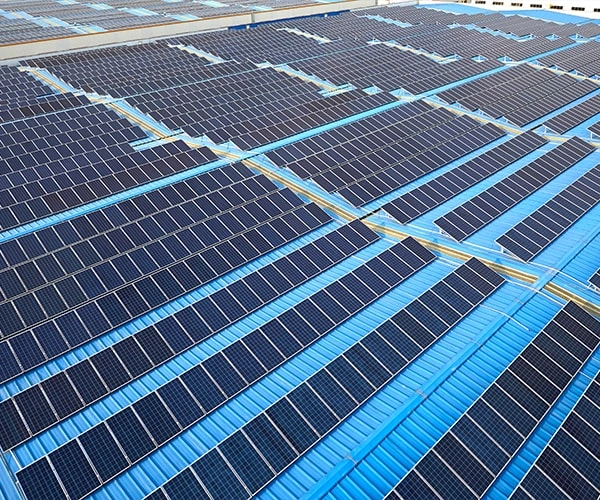
A scalable battery storage configuration can also make future capacity expansion easier as electricity demand grows.
4. Integrar la carga de vehículos eléctricos con energía solar y almacenamiento
EV chargers can become a significant electricity load when multiple vehicles charge simultaneously. Treating EV charging as an independent system may increase peak demand and reduce overall energy efficiency.
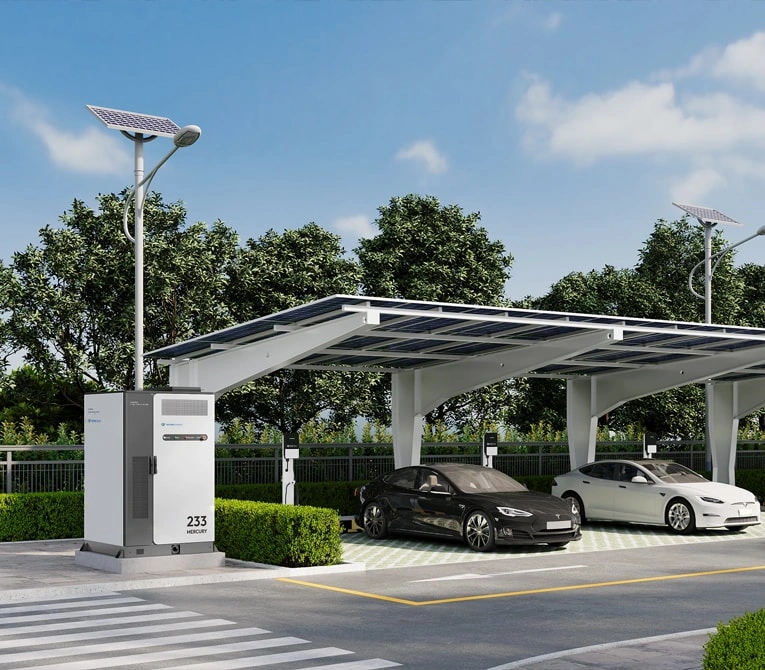
Instead, charging should be coordinated with solar generation and battery operation.
For example, vehicles can be charged during periods of strong solar output. When solar generation is insufficient, the battery can provide additional energy. Charging power can also be adjusted according to grid capacity and current electricity demand.
This creates a smart EV charging strategy that makes better use of renewable electricity while helping control peak loads.
5. Conectar el Sistema a Través de la Gestión de la Energía
An Energy Management System (EMS) provides the intelligence needed to coordinate different energy assets.
It can monitor PV generation, battery status, building loads, EV charging demand, and grid conditions in real time. Based on predefined strategies, the system can determine when to use solar power, charge the battery, discharge stored energy, or adjust charging loads.
For example, a facility may prioritize solar self-consumption during the day, store excess generation in the battery, and use stored energy during high-price periods.
A well-designed EMS can therefore turn separate energy assets into one integrated energy system.
6. Plan para la seguridad y el crecimiento futuro
A successful project should also consider electrical protection, battery safety, thermal management, fire protection, communication, monitoring, and maintenance.
Future expansion is equally important. A company may start with a certain PV capacity and a small number of EV chargers but later increase its electricity consumption or expand its electric vehicle fleet.
Using modular equipment and reserving sufficient electrical capacity can make future upgrades easier and reduce the cost and complexity of system expansion.
Construya un sistema de energía C&I más flexible
An integrated solar, storage, and EV charging system can help businesses make better use of renewable energy while improving energy flexibility and reducing unnecessary peak demand.
The optimal configuration depends on the facility's electricity profile, available space, grid conditions, EV charging requirements, and long-term energy strategy.
Rather than viewing solar generation, battery storage, and EV charging as separate investments, businesses can design them as one coordinated system. With the right architecture and energy management strategy, C&I facilities can build a more efficient, resilient, and future-ready energy infrastructure.
Preguntas frecuentes
1. ¿Qué es un sistema integrado solar, de almacenamiento y de carga de vehículos eléctricos para el sector comercial e industrial (C&I)?
Un sistema de energía C&I integrado combina energía solar fotovoltaica, almacenamiento de energía en baterías, infraestructura de carga para vehículos eléctricos y un sistema de gestión de energía. Estos componentes trabajan juntos para generar, almacenar y distribuir electricidad de acuerdo con la demanda energética de la instalación.
2. ¿Por qué combinar la energía solar fotovoltaica comercial e industrial con el almacenamiento en baterías?
Agregar almacenamiento en batería permite a las empresas almacenar el exceso de energía solar y utilizarlo cuando la generación solar es baja o la demanda de electricidad es alta. También puede respaldar la reducción de picos de demanda, el autoconsumo solar y la energía de respaldo, según el diseño del sistema.
3. ¿Necesito un sistema BESS para un sistema solar comercial?
No necesariamente. Un sistema fotovoltaico comercial e industrial puede funcionar sin BESS cuando la instalación tiene una fuerte demanda de electricidad diurna y el perfil de generación solar coincide con su carga. El BESS se vuelve más valioso cuando el proyecto necesita gestión de la demanda máxima, desplazamiento de energía, energía de respaldo o una mayor utilización solar.
4. ¿Cómo dimensiono un sistema fotovoltaico solar C&I?
La capacidad fotovoltaica debe determinarse en función del consumo de electricidad, el perfil de carga, el área de instalación disponible, los recursos solares, las condiciones de la red y los objetivos energéticos del proyecto. Utilizar únicamente el área de tejado disponible para determinar el tamaño del sistema puede dar lugar a una configuración ineficiente.
5. ¿Puede la energía solar cargar directamente los vehículos eléctricos?
Sí. La energía solar fotovoltaica puede suministrar electricidad directamente a los cargadores de vehículos eléctricos cuando hay generación solar disponible. Esto puede aumentar la utilización de energía renovable in situ. Sin embargo, la demanda de carga puede no coincidir siempre con la producción solar, que es donde la carga inteligente o los sistemas de almacenamiento de energía en baterías (BESS) pueden proporcionar flexibilidad adicional.
6. ¿Qué hace un EMS en un sistema solar y de almacenamiento C&I?
Un sistema de gestión de energía coordina la generación fotovoltaica, el BESS, los cargadores de vehículos eléctricos, las cargas de las instalaciones y la energía de la red. Puede determinar cuándo cargar o descargar la batería, priorizar el consumo solar, gestionar las cargas de carga de vehículos eléctricos y mantener la reserva de la batería de acuerdo con la estrategia operativa del proyecto.
7. ¿Qué se debe tener en cuenta antes de diseñar un sistema solar y de almacenamiento comercial e industrial (C&I)?
Los factores importantes incluyen el perfil de carga, la demanda máxima, las tarifas eléctricas, el área fotovoltaica disponible, la capacidad de la red, los requisitos de baterías, la demanda de carga de vehículos eléctricos, las condiciones de instalación, los requisitos de seguridad y la expansión futura. Estos factores deben evaluarse en conjunto en lugar de dimensionar cada componente de forma independiente.