


Índice de contenidos
Choosing the right battery energy storage system (BESS) is critical for outdoor energy storage projects. Among the most important decisions is the cooling method. Air-cooled BESS and liquid-cooled BESS are the two common options, but which one is better for outdoor applications?

The answer depends on the project’s energy density, operating environment, budget, maintenance requirements, and expected performance.
¿Qué es un BESS refrigerado por aire?
An air-cooled BESS uses fans and an internal air circulation system to remove heat generated by battery cells and other components. The design is relatively simple and is widely used in commercial and industrial energy storage, solar-plus-storage systems, backup power, and off-grid applications.
The main advantages of air cooling include a simpler system structure, easier maintenance, and generally lower initial costs. For projects with moderate energy density and suitable ambient conditions, an air-cooled system can provide reliable thermal management without the complexity of a liquid cooling system.
¿Qué es un BESS de refrigeración líquida?
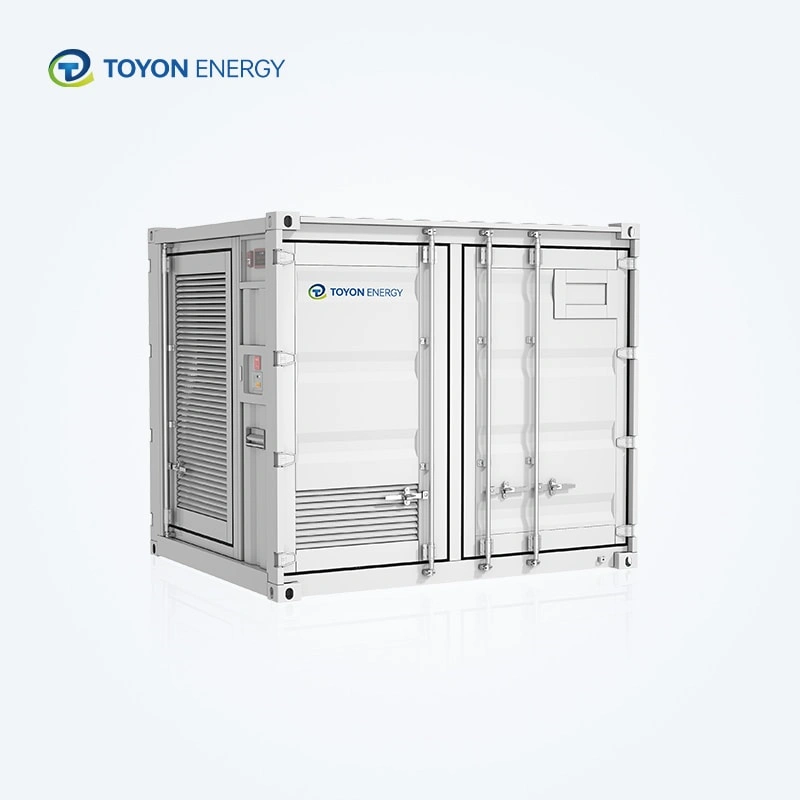
A liquid-cooled BESS uses a liquid circulation system to transfer heat away from battery cells. Because liquid has a higher heat-transfer capability than air, this technology can provide more precise and uniform temperature control.
Liquid cooling is particularly suitable for high-energy-density BESS, large-scale battery storage projects, and applications operating under demanding thermal conditions. However, the system normally has a more complex design and may require additional components, maintenance, and investment.
BESS refrigerado por aire frente a refrigerado por líquido: Diferencias clave
| Factorizar | Air-Cooled BESS | Liquid-Cooled BESS |
|---|---|---|
| Cooling structure | Simpler | More complex |
| Initial cost | Generally lower | Generally higher |
| Mantenimiento | Easier | More specialized |
| Energy density | Suitable for moderate density | Better for high density |
| Thermal control | Good | More precise |
| Instalación | Relativamente sencillo | More complex |
| Typical applications | C&I, backup, off-grid | Large-scale, high-density BESS |
¿Qué método de refrigeración BESS es mejor para aplicaciones en exteriores?
There is no single solution that is best for every outdoor BESS project.
Para proyectos de almacenamiento de energía comercial e industrial, an air-cooled BESS can be a practical choice when cost, simplicity, and easy maintenance are priorities. It can also be advantageous when the installation environment does not require extremely high energy density.
For large projects where space is limited and thermal performance is a major concern, liquid-cooled BESS may offer greater advantages. Its more precise temperature control can support high-density battery configurations and demanding operating conditions.
However, cooling technology is only one part of outdoor BESS selection. Buyers should also consider IP protection, corrosion resistance, fire protection, battery cycle life, operating temperature range, system capacity, installation space, and after-sales support.
Cómo elegir el BESS para exteriores adecuado
Before selecting an outdoor battery energy storage system, evaluate:
1. Project size and energy requirements
Determine the required power and storage capacity before comparing cooling technologies.
2. Local climate
High temperatures, humidity, dust, and other environmental conditions can significantly affect battery performance.
3. Available installation space
If space is limited, higher energy density may become an important consideration.
4. Total cost of ownership
Do not compare only the initial purchase price. Consider energy efficiency, maintenance, component replacement, and expected service life.
5. Safety and protection
Outdoor BESS should have appropriate enclosure protection, thermal management, fire detection, and protection against harsh environmental conditions.
Reflexiones finales
Air-cooled and liquid-cooled BESS each have their place in outdoor applications. The right choice depends on factors such as project size, climate, installation space, budget, and maintenance needs. By balancing these factors, you can select a cooling solution that delivers reliable performance and long-term value.
Preguntas frecuentes
1. ¿Cuál es la diferencia principal entre los sistemas de almacenamiento de energía en baterías (BESS) refrigerados por aire y por líquido?
Air-cooled BESS uses fans and air circulation to remove heat, while liquid-cooled BESS uses a circulating coolant to transfer heat. Liquid cooling generally provides more precise and uniform temperature control.
2. ¿Es el BESS refrigerado por líquido mejor que el BESS refrigerado por aire?
Not necessarily. Liquid cooling is advantageous for high-density and large-scale applications, while air cooling can be a more practical choice when simplicity, lower initial cost, and easier maintenance are priorities.
3. ¿Qué sistema de refrigeración BESS es más rentable?
Air-cooled BESS generally has a simpler structure and lower upfront cost. However, the overall cost should also include energy efficiency, maintenance, component replacement, and long-term operating expenses.
4. ¿Qué método de refrigeración es mejor para entornos de alta temperatura?
Liquid cooling can provide more precise temperature management in demanding thermal conditions. However, actual performance depends on the complete system design, ambient temperature, enclosure, HVAC strategy, and battery specifications.
5. Does liquid cooling increase BESS maintenance requirements?
Liquid-cooled systems have additional components such as pumps, pipes, and coolant circuits, which can make maintenance more specialized. Air-cooled systems generally have a simpler cooling structure.
6. Is air cooling suitable for high-energy-density BESS?
It can be, depending on the system design and required energy density. However, as battery density increases, liquid cooling may provide greater advantages in managing heat within a compact installation footprint.
7. What should I consider when choosing an outdoor BESS cooling system?
Consider project capacity, energy density, local climate, available space, operating temperature, maintenance capability, budget, safety requirements, and expected service life before selecting a cooling method.
8. Is liquid-cooled BESS more energy-efficient than air-cooled BESS?
Cooling efficiency depends on the complete system design and operating conditions. Liquid cooling can offer efficient heat transfer, but auxiliary energy consumption from pumps and other components should also be considered when evaluating total system efficiency.