


The cost of commercial battery energy storage is not just the price of its battery modules. If you have received two quotations with similar kWh ratings but very different prices, the difference may lie in their power ratings, included equipment or site work. Understanding what each offer actually covers is the first step toward a useful comparison.
Table of Contents
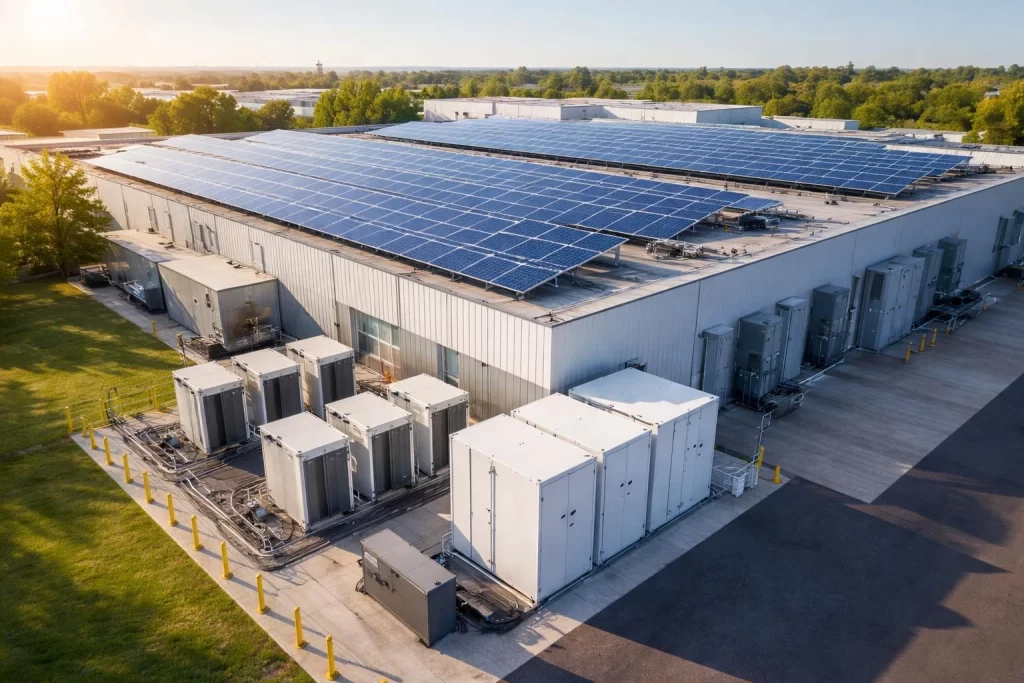
A commercial battery energy storage system (BESS) combines batteries with power conversion, protection, thermal management and controls to store electricity and release it when needed. It can support peak demand management or solar self-consumption; supplying loads during an outage also requires the appropriate backup configuration.
So, how much will your project cost? There is no single price that fits every facility. Start by separating the equipment price from the total installed cost, then consider the total cost of ownership over the planned operating life. The six factors below explain where those differences arise.
1. Battery Capacity and System Power Rating
Battery energy capacity, measured in kilowatt-hours (kWh), describes how much electrical energy a system can store. Its power rating, measured in kilowatts (kW), describes the rate at which it can charge or discharge. Both affect commercial battery energy storage cost: the same kWh capacity can be paired with different power conversion equipment and serve different loads.
For example, a 120kWh outdoor battery storage cabinet may suit a small commercial facility or retail business, depending on its load and operating needs. Capacity alone does not establish backup duration. Available runtime depends on usable energy, load, conversion losses and the operating reserve; the system must also meet the required discharge power.
Larger industrial facilities may require systems with several hundred kilowatt-hours or even multiple megawatt-hours of storage capacity.
When sizing commercial battery energy storage, start with the facility's operating needs:
- Daily electricity consumption and peak demand.
- Required backup power duration.
- Charging and discharging power.
- Expected daily operating cycles.
- Future expansion requirements.
A higher battery capacity generally increases the initial investment, but choosing an oversized system may also lead to unnecessary costs. The right configuration should match the facility's actual load profile and energy management objectives.
2. Battery Chemistry and Voltage Configuration
Battery chemistry affects battery energy storage cost, safety requirements and expected service life. Compare products under stated operating conditions rather than relying on a cycle-life figure alone.
Lithium iron phosphate (LiFePO4 or LFP) batteries are widely used in commercial energy storage because of their thermal stability, cycle life, and suitability for frequent charging and discharging.
Voltage configuration is another important consideration. High-voltage lithium battery systems are commonly used in commercial and industrial applications because they can support higher system power levels with lower current for the same power output, potentially reducing resistive cable losses when properly designed. Conversion efficiency still depends on the selected equipment and operating conditions.
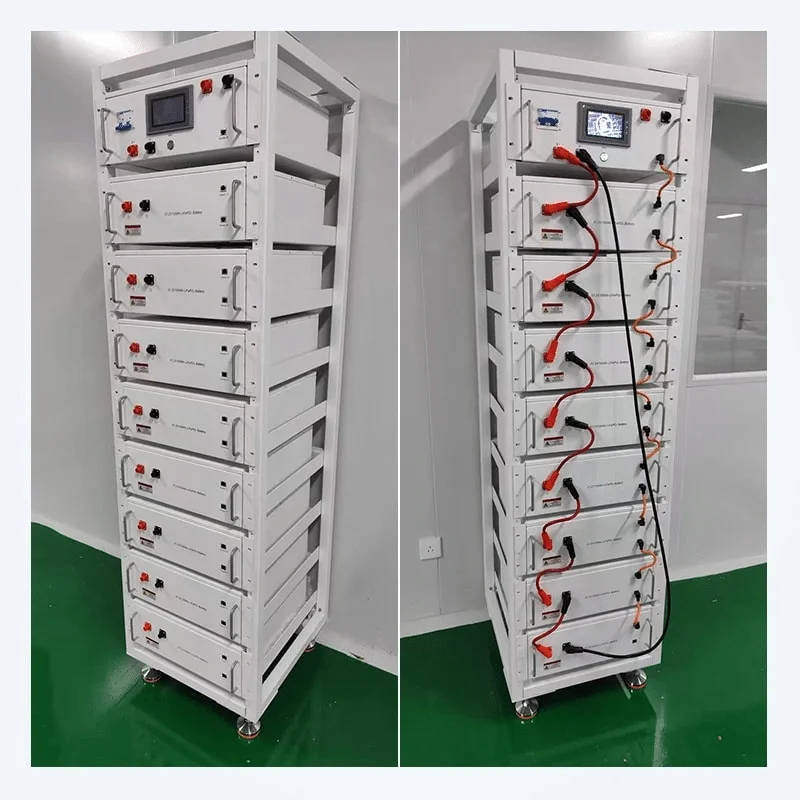
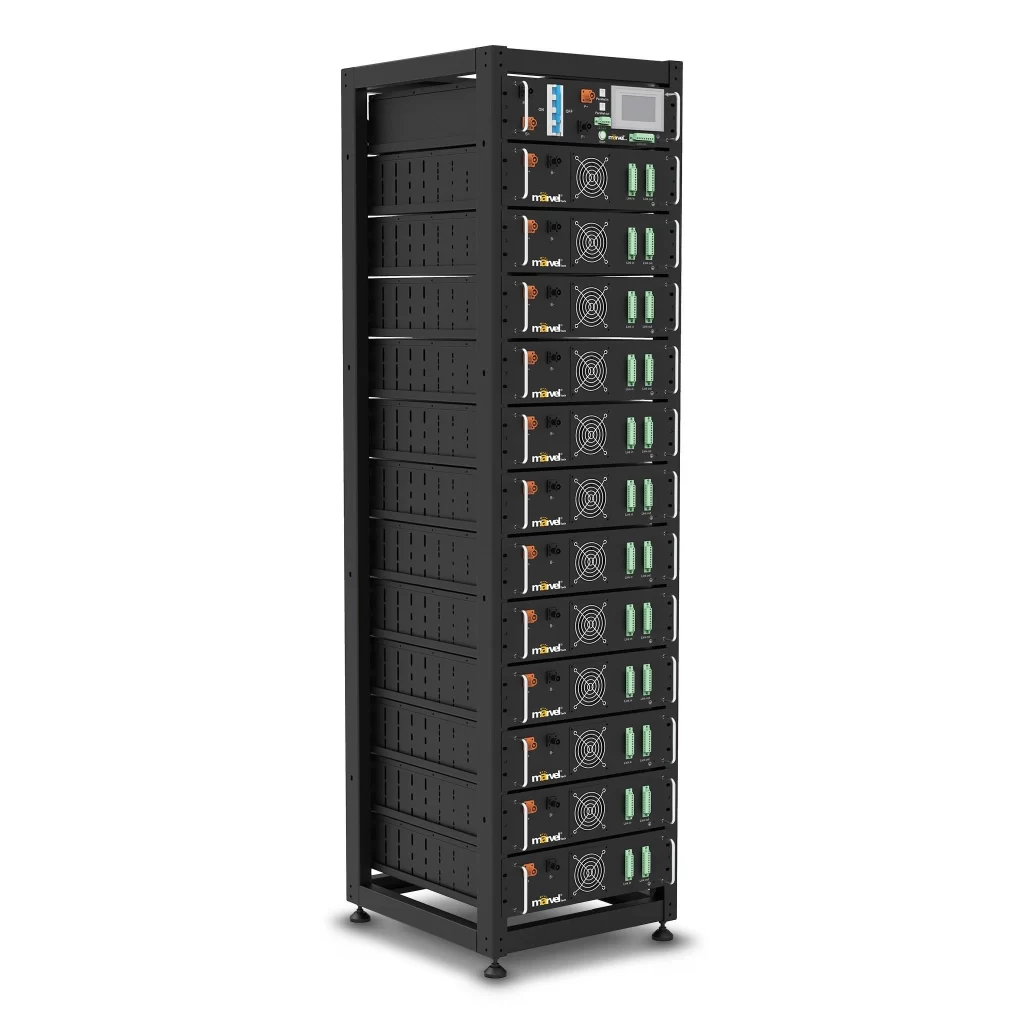
For businesses evaluating high voltage lithium battery wholesale options, it is important to compare more than the battery purchase price. Key considerations include:
- Battery capacity and nominal voltage.
- Charge and discharge performance.
- Cycle life and operating temperature range.
- Battery Management System (BMS) compatibility.
- Certifications and warranty conditions.
- Compatibility with hybrid or bidirectional inverters.
The battery modules, BMS, and inverter must work together as a coordinated system. A lower battery price does not necessarily mean a lower total project cost if additional integration or compatibility work is required.
3. Cooling Technology: Air Cooling vs. Liquid Cooling
Thermal management affects battery energy storage performance, especially when systems operate at high power or in demanding environmental conditions.
Air-cooled systems use fans and air circulation to manage battery temperatures. They generally have a simpler structure and may offer lower initial equipment costs, making them suitable for certain smaller or less demanding applications.
Liquid-cooled energy storage systems use a circulating coolant to regulate battery temperatures. This approach can provide more uniform temperature management across battery modules, which is valuable for larger and higher-density installations.
However, liquid cooling also introduces additional components, including cooling units, pumps, pipelines, and control systems. These components can increase the initial investment and require additional maintenance considerations.
For a liquid-cooled ESS container, compare the complete thermal management design rather than assuming that one cooling label guarantees a lower lifetime cost.
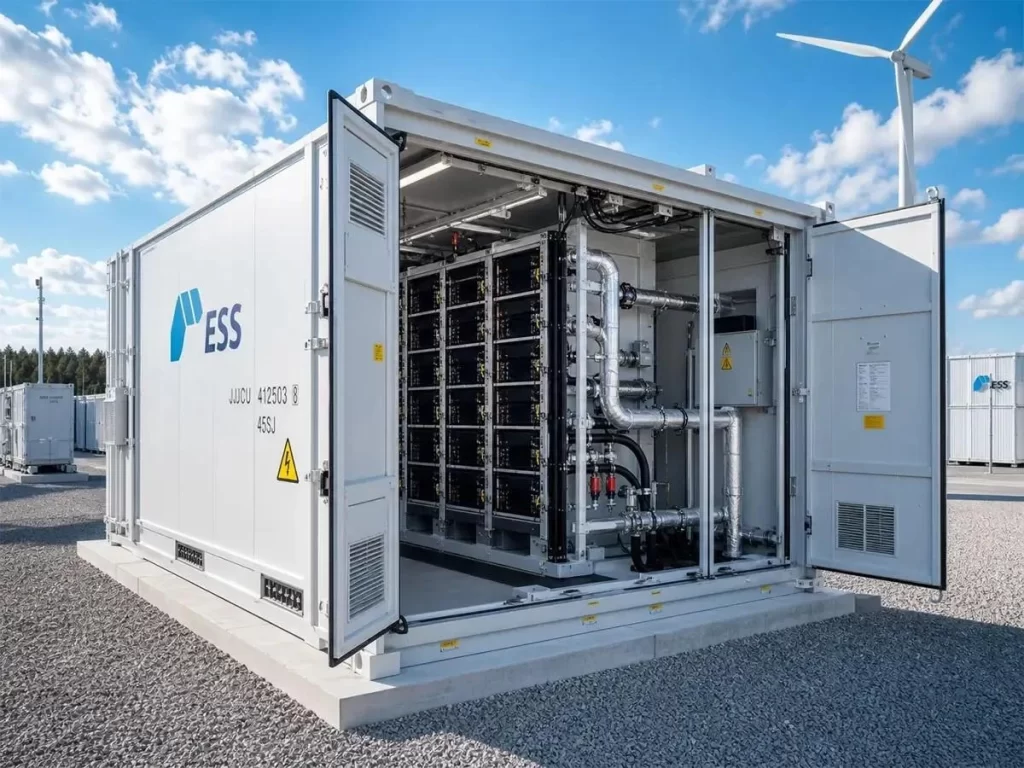
Important factors include cooling capacity, temperature control accuracy, auxiliary power consumption, maintenance requirements, and the operating environment.
The choice between air cooling and liquid cooling should depend on system capacity, operating conditions, installation location, and long-term performance requirements.
4. Inverters, PCS, and Energy Management Systems
Battery modules are only one part of a complete commercial battery energy storage system. Power conversion equipment and energy management systems also contribute significantly to the total cost.
A bidirectional Power Conversion System (PCS) converts between battery DC power and the site's AC supply, enabling charging and discharging. How solar generation charges the battery depends on the project's AC-coupled or DC-coupled design and compatible equipment.
The inverter or PCS power rating should be selected according to the facility's load requirements and intended operating strategy.
An Energy Management System (EMS) schedules charging and discharging around electricity prices, solar generation and site demand. The Battery Management System (BMS) has a different role: it monitors battery conditions and enforces operating limits. Their communication and integration requirements should be included in the project scope.
For example, a factory may charge its batteries during periods of low electricity prices or when excess solar energy is available, then discharge stored electricity during peak demand periods.
Depending on project requirements, additional costs may include:
- Hybrid inverters or bidirectional PCS.
- EMS controllers and monitoring platforms.
- Grid communication and control equipment.
- Protection devices and electrical distribution components.
- Remote monitoring and system integration.
For battery energy storage to support the intended savings, its controls need to match the site's tariff, metering arrangement and load pattern. Software capabilities that do not serve the planned operating strategy may add cost without useful value.
5. Battery Energy Storage Cabinet Design and OEM Customization
Battery energy storage enclosure costs depend on where the equipment will operate. Outdoor installations need suitable housing to protect electrical components and battery modules from the local environment.
A commercial battery storage cabinet may include weather-resistant housing, thermal management equipment, electrical protection, fire safety provisions, and monitoring components.
The required protection level depends on the installation environment. Projects in coastal areas, regions with high temperatures, or locations with frequent dust exposure may require additional design considerations.
For businesses developing their own energy storage products, working with a commercial battery storage cabinet OEM can provide greater flexibility in system configuration and product appearance.
OEM and ODM customization may involve:
- Cabinet dimensions and structural design.
- Battery capacity and voltage configuration.
- Cooling and thermal management systems.
- Electrical interfaces and communication protocols.
- Branding, labeling, and product appearance.
- Monitoring and control functions.
Customization can increase engineering and production costs, especially for small orders or non-standard configurations. However, it may also help businesses develop products that better match their target markets and project requirements.
6. Installation, Transportation, and Maintenance Costs
The equipment purchase price does not represent the entire investment. Installation, transportation, commissioning, and long-term maintenance should also be included when calculating the total project cost.
Battery energy storage installation costs depend on the site layout, existing electrical infrastructure, foundation requirements, grid connection conditions and local regulations.
For containerized battery energy storage, transport costs depend on equipment dimensions, shipping distance, destination port and local delivery requirements. Check whether unloading and lifting are included, particularly where site access is restricted.
Businesses should also consider long-term operating expenses, including:
- Routine system inspections.
- Cooling system maintenance.
- Electrical connection checks.
- Battery performance monitoring.
- Software updates and technical support.
Evaluating the total cost of ownership (TCO) gives a more realistic picture than comparing equipment prices alone. Include charging energy and conversion losses, cooling and other auxiliary consumption, maintenance, any recurring software fees and potential replacement costs. Warranty coverage and service responsibilities affect how those costs are shared.
7. How to Estimate Total Battery Energy Storage Cost
Before requesting quotations, project owners should define their electricity consumption patterns, required storage capacity, power rating, and expected operating strategy.
A practical cost evaluation should include the following components:
| Cost Component | Main Factors |
|---|---|
| Battery modules | Chemistry, capacity, voltage, and cycle life |
| PCS / Inverter | Rated power and conversion efficiency |
| Cooling system | Air cooling or liquid cooling |
| EMS and BMS | Monitoring, control, and communication |
| Cabinet or container | Structure and protection requirements |
| Installation | Electrical work and commissioning |
| Transportation | Shipping and local delivery |
| Maintenance | Inspection and technical support |
For example, a 120kWh outdoor battery storage cabinet and a larger containerized BESS may have very different cost structures. Their prices depend not only on battery capacity but also on power ratings, integrated equipment, cooling design, and project-specific requirements.
To compare quotations fairly, use the same energy basis, power rating and delivery scope. Ask whether each price includes PCS, protection, cooling, controls, freight, duties, civil and electrical work, grid connection and commissioning. Separate excluded items before comparing the totals. An equipment-only quote and an installed, commissioned system are different offers, even when their headline kWh ratings match.
Conclusion
Commercial battery energy storage cost reflects the complete configuration: capacity and power, battery design, cooling, controls, enclosure requirements and site delivery. A useful budget makes the equipment, installation and ongoing operating costs visible separately.
Rather than choosing a system based solely on its initial price, businesses should evaluate how well its configuration matches their electricity demand, operating conditions, and long-term energy management goals.
Whether you are planning a 120kWh outdoor battery storage project or a larger containerized installation, start with the problem your facility needs to solve. Then compare offers that deliver the same usable energy, power and services. That makes it easier to see where a higher price buys something useful, and where it does not.
FAQs About Commercial Battery Energy Storage Cost
Why do systems with the same kWh rating have different prices?
The kWh rating tells you only part of the story. Systems may have different power ratings, usable energy limits, cooling, protection and control equipment. One quote may cover battery cabinets only, while another includes PCS and commissioning. Compare the configuration and included services before deciding which offer represents better value for your facility.
How should I compare battery energy storage cost per kWh?
Divide the quoted cost by the stated energy capacity, but use the same basis for both offers: nominal or usable kWh, and equipment-only or total installed cost. Record the kW rating and operating conditions alongside that figure. A cell or battery-pack price per kWh cannot be compared directly with the installed cost of a complete BESS.
Does a lower purchase price mean lower lifetime cost?
Not necessarily. Efficiency, auxiliary consumption, maintenance, service fees and future replacements all affect what you spend over time. Compare warranty conditions, including any energy-throughput limits, against the planned operating duty. Electricity tariffs and the facility's actual load profile also matter when assessing savings; a lower upfront price alone does not establish a shorter payback period.